
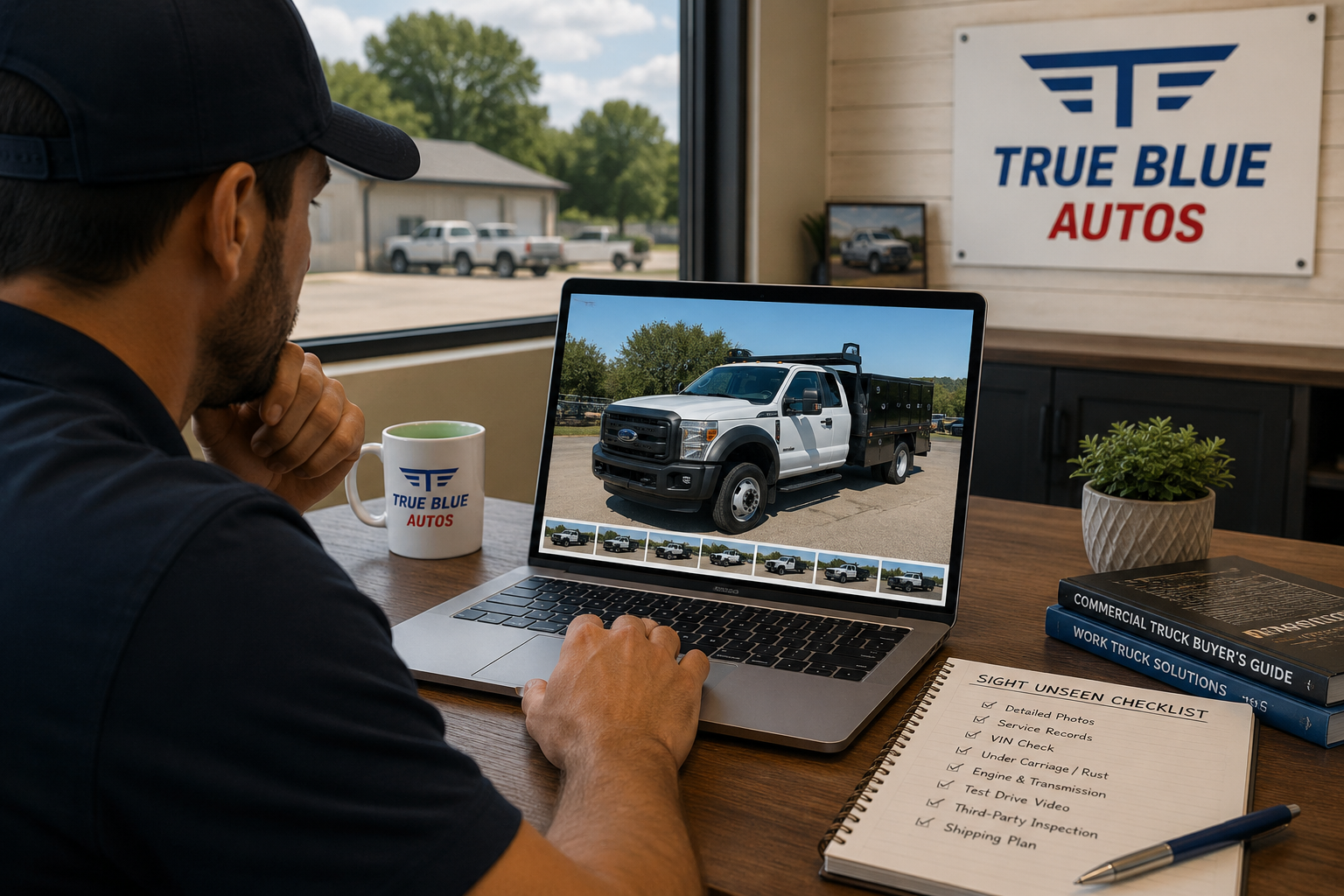
It’s a fair question — and probably one of the biggest hesitations buyers have before purchasing a work truck out of state. Handing over real money for a vehicle you’ve never walked around, sat in, or heard run feels like a leap of faith. The good news: buying sight unseen has become common and can be done safely, as long as you know what to check and who to trust. Here’s an honest look at the real risks, how to protect yourself, and why buying from a dealer changes the equation significantly compared to a private sale.
Why Sight-Unseen Buying Has Become So Common
This isn’t some fringe workaround anymore — it’s mainstream. In many cases, shoppers widen their search because local inventory is limited, especially for affordable used vehicles, and that trend has only accelerated as national listing sites make it easy to browse thousands of trucks at once. Cox Automotive reported that U.S. dealers had 2.13 million used vehicles in inventory in February 2026, equal to 42 days of supply — and vehicles priced below $15,000 had even tighter supply, at just 31 days. With fewer budget-friendly options sitting locally, more buyers are turning to nationwide listings and remote purchases simply to find the right truck at the right price.
Done carefully, this isn’t reckless — it’s just a different process with different checkpoints. Buying a car sight unseen means purchasing a vehicle without physically inspecting or test-driving it in person, relying instead on photos, videos, inspection reports, and conversations with the seller to evaluate its condition.
The Real Risks Worth Taking Seriously
It would be dishonest to pretend there’s no risk here. A handful of legitimate concerns come up again and again:
- Hidden mechanical or cosmetic issues. Without a hands-on look, you’re trusting someone else’s description and photos. If the vehicle arrives with problems, you might face a lengthy dispute process to seek a resolution — which is exactly why the verification steps below matter so much before money changes hands.
- Fraud, particularly from private sellers. This is where the real danger lives. Dishonest car sellers may claim to be too busy or far away to meet you, and may even offer a fake inspection report to convince you the vehicle is in working order — if it exists at all. Scammers specifically target buyers who never plan to see the vehicle in person, since a remote transaction gives them far more room to hide problems or disappear with a deposit.
- Title and lien issues. Always check for liens on the vehicle you intend to buy, since a lien gives a bank or lender legal claim to the truck for an unpaid debt — something that can create real headaches if it isn’t cleared before the sale closes.
- Odometer fraud. This is more common than most buyers realize. The National Highway Traffic Safety Administration estimates that more than 450,000 vehicles are sold annually with falsified odometer readings, a crime that costs American buyers over $1 billion a year — all the more reason to verify mileage independently rather than taking a listing at face value.
Why the Seller You’re Buying From Matters More Than Anything Else
This is the single biggest factor in how safe a sight-unseen purchase actually is. If you’re buying sight unseen, it’s generally more advantageous to do so from a dealer than a private seller, largely because you can much more easily verify the seller’s reputation. A licensed dealership has a physical address, a business history, online reviews, and accountability that a stranger on a classifieds site simply doesn’t.
Private-party sight-unseen deals carry the most risk by far. Serious buyers typically want to see a vehicle and ask questions before purchasing, and the same logic runs in reverse — a private seller who’s cagey about video calls, documentation, or answering direct questions is a red flag worth taking seriously, whether you’re the buyer or the seller in that scenario.
How to Protect Yourself Before You Buy
Whether you’re working with a dealer or a private party, a few concrete steps go a long way toward closing the gap that not seeing the truck in person leaves open:
- Get a vehicle history report. Request a detailed vehicle history report from a trusted provider such as Carfax or AutoCheck to check for accidents, title issues, flood damage, and mileage discrepancies before you commit to anything.
- Ask for real video, not just photos. A video walkaround gives you a much better sense of the vehicle’s actual condition than photos alone, and can reveal flaws that still images tend to hide — it also helps confirm the seller actually has physical access to the vehicle they’re describing.
- Arrange an independent inspection. This is arguably the single most valuable step you can take. Hire a trusted mechanic or third-party inspection service near the seller’s location to look the truck over before you finalize the deal — a professional inspection can catch issues that photos and a phone call never will.
- Verify the VIN and check for title problems. According to the National Insurance Crime Bureau, buyers should verify a vehicle’s VIN and check for title problems before purchasing a used vehicle online — a step that takes minutes and can save you from a costly title dispute down the road.
- Take your time. It’s tempting to rush once you’re ready to buy, but a short delay can uncover valuable facts about the dealer, warranty terms, or delivery conditions. Don’t let pressure to “act fast” push you past basic due diligence.
- Use a secure payment method. If you’re financing, get that lined up ahead of time. And regardless of how you’re paying, never wire money or share banking credentials directly with an individual seller — there’s never a legitimate reason for a seller to ask for your account credentials, even under the guise of receiving payment.
Red Flags That Should Make You Slow Down
A few warning signs are worth treating as hard stops, not minor annoyances:
- A seller who avoids video calls or refuses to answer specific questions about the truck’s condition or history.
- Pressure to pay immediately or skip an independent inspection to “lock in the deal.”
- Prices dramatically below market value. If something seems too good to be true, it probably is — an unusually low price relative to comparable listings is one of the clearest signals something’s off.
- A seller who insists on a specific inspector or inspection location. In some scams, fraudsters insist on a pre-purchase inspection done at a place of their choosing, then return a biased or fake report to pressure a lower price. Take control of the inspection process yourself.
- No verifiable business history. For a dealership, check reviews beyond the dealer’s own website — the Better Business Bureau, third-party review sites, and general search results can confirm whether a business has a real, consistent track record.
Why Buying From an Established Dealer Changes the Math
All of the risk described above assumes you’re navigating the process entirely on your own with a stranger. That calculation shifts considerably when you’re buying from a dealership with a physical location, a documented history, and a reputation to protect.
A reputable dealer typically has already done much of the verification work for you — pulling history reports, inspecting the vehicle, and standing behind the sale in a way an anonymous private seller simply can’t. It’s also worth remembering that reliable shipping support can make buying sight unseen far less stressful in general, since a trustworthy shipper adds another layer of documentation — inspection at pickup, inspection at delivery — on top of whatever the dealer has already verified.
Bottom Line
Buying a commercial truck you’ve never seen in person isn’t inherently risky — but buying one carelessly is. The combination of a documented vehicle history, an independent inspection, verified title status, and a seller with real accountability turns a sight-unseen purchase into a well-informed one rather than a gamble. The dealer you choose to work with matters just as much as the truck itself.
Buy With Confidence
At True Blue Autos, every truck in our inventory is inspected and detailed by our sister company, Enneking Auto Body, before it’s ever listed — and our team is happy to answer questions, share additional photos or video, and walk you through the truck’s history before you commit to anything.
1661 N Michigan Ave, Greensburg, IN 47240
Call: (812) 222-8783
Contact True Blue Autos
Reach out today — we’re here to answer every question before you buy, not just after.
Frequently Asked Questions
Is it actually safe to buy a truck sight unseen?
It can be, when done carefully. Buying sight unseen has become common as buyers search nationwide for the right vehicle at the right price, and with the right verification steps — history reports, video walkarounds, independent inspections — the risk can be managed effectively. The safety comes down more to who you’re buying from than the fact that you haven’t seen the truck in person.
What’s the biggest risk of buying a vehicle you haven’t seen?
Fraud from private sellers is the biggest concern. Dishonest sellers may claim to be too busy or far away to meet, and may even provide a fake inspection report to make a truck look better than it is. Buying from an established dealer with a real business history and accountability significantly reduces this risk compared to a private-party transaction.
Should I trust photos alone before buying?
No — always ask for real video in addition to photos. A video walkaround gives a much better sense of the vehicle’s actual condition than photos alone, and it also helps confirm the seller genuinely has physical access to the truck they’re describing.
Do I really need an independent inspection if I’m buying from a dealer?
It’s still a smart step, even with a reputable dealer, and it’s essential with a private seller. Hiring a trusted mechanic or third-party inspection service near the vehicle’s location can catch issues that photos and conversations never will — and it’s one of the most valuable protections you have in a remote purchase.
How do I check if a truck has a clean title?
Pull a vehicle history report from a trusted provider like Carfax or AutoCheck, and separately verify the VIN and check for title problems, since even a truck with a spotless-looking listing can carry an undisclosed lien or title issue.
What if I’m buying from a private seller instead of a dealer?
Take extra precautions. Verify the seller is who they say they are, ideally through a video call, and never send money through a wire transfer or share your banking credentials directly — there’s never a legitimate reason for a seller to request account access to receive payment.
What are the clearest red flags to watch for?
A seller who avoids video calls or dodges specific questions, pressure to pay immediately or skip an inspection, a price well below market value, or insistence on using a specific inspector of their choosing rather than one you select yourself. Any of these is a reason to slow down or walk away.
Why does buying from a dealership reduce the risk so much?
A licensed dealership has a physical address, a documented business history, and a reputation to protect — all things an anonymous private seller doesn’t have. Reputable dealers also typically handle much of the verification work upfront, including inspections and history reports, before a truck is ever listed for sale.
Does using a shipping company add any extra protection?
Yes, indirectly. A reliable shipper documents the vehicle’s condition at both pickup and delivery, which adds another layer of accountability on top of whatever verification the dealer has already done — giving you a paper trail if anything looks different once the truck arrives.
Is odometer fraud something I should actually worry about?
It’s more common than most buyers assume. The National Highway Traffic Safety Administration estimates over 450,000 vehicles are sold annually with falsified odometer readings, costing buyers more than $1 billion a year combined — which is exactly why an independent vehicle history report is worth running before every purchase, not just the ones that seem suspicious.