
Once you’ve bought a work truck and locked in your shipping quote, the next question is almost always about timing: when is this thing actually going to show up? Unlike buying something online with a guaranteed two-day delivery window, truck shipping runs on estimates rather than fixed dates — and understanding why can save you a lot of frustration while you wait. Here’s a realistic breakdown of how nationwide truck shipping timelines actually work, from booking to delivery.
The Short Answer
Timing breaks down into two separate phases that people often lump together: the pickup window and the transit time. Car shipping typically starts a few days after you book, and most carriers provide a pickup window of three to five days from your reservation date — that’s the time it takes for a carrier to actually arrive and load your truck, which is separate from how long the drive itself takes. Once your truck is loaded, expect delivery to take anywhere from a few days to two weeks, depending on distance and route.
Put those two phases together, and cross country car shipping over 1,500 miles typically takes 7 to 14 days in transit, and once you add 1 to 3 days for booking and dispatch, most customers see door-to-door delivery in 10 to 17 days.
Why It’s an Estimate, Not a Guarantee
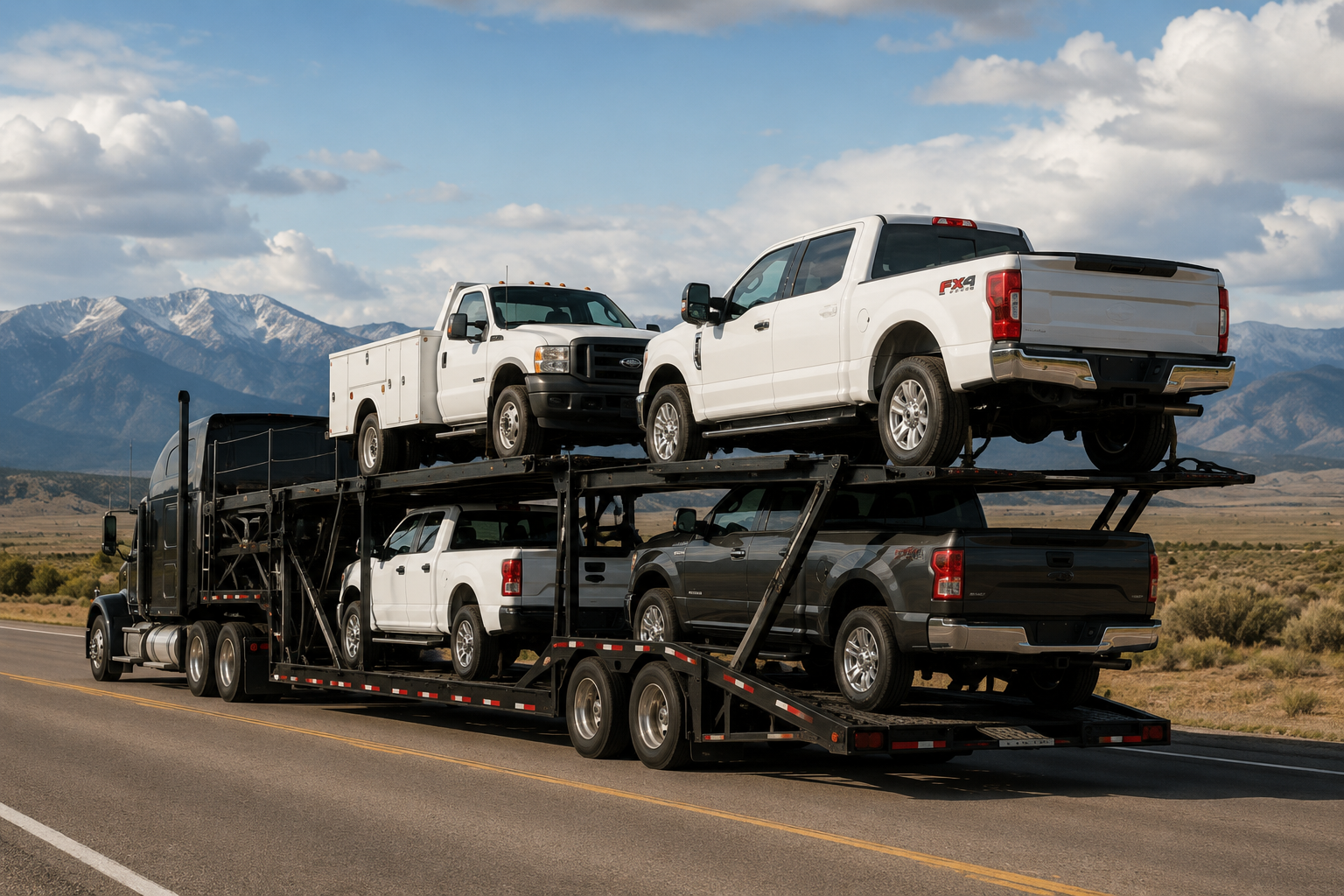
This trips people up more than any other part of the process. A car carrier can technically drive across the entire country in a little over four days, but that’s not how it actually works in practice — carriers have to make stops along the way to pick up and drop off other vehicles, since there can be up to 10 or 11 vehicles on a single truck, and they’re not usually all headed to the same city. Your truck is one stop on a route that’s serving several other customers at once.
Federal hours-of-service rules add another layer of predictability — and unpredictability. Federal regulations limit truck drivers to 11 consecutive hours behind the wheel per day, with mandatory rest breaks required to maintain safety standards, which means most auto transport carriers average 400-500 miles per day during cross-country hauls once you account for driver rest, fuel stops, and other pickups and deliveries along the way.
Because of all this, it’s considered a sign of bad faith if a transport company gives you a specific delivery date rather than an estimated window — legitimate carriers work in ranges, not guarantees, unless you’re paying extra for an expedited or guaranteed service.
Timelines by Distance
Transit time is driven primarily by how far the truck is traveling. Here’s roughly what to expect once your truck is actually loaded and moving:
- Under 500 miles: Open auto shipping for distances under 500 miles usually completes within 3-7 days on average.
- 500–1,000 miles: Shipments between 500-1,000 miles take a bit longer at 5-10 days to account for the additional road transit time.
- 1,000–1,500 miles: Standard open shipping deliveries for moves in the 1,000-1,500 mile range span about 7-14 days end-to-end.
- 1,500+ miles (true cross-country): For long-distance car transport routes over 1,500 miles, open shipping transit often completes in a 14-21 day range on average.
- True coast-to-coast (2,500–3,000 miles): The standard answer for coast to coast shipping time is 7-10 days of actual transit, with coast-to-coast auto transport covering approximately 2,500 to 3,000 miles total.
A simple rule of thumb some shippers use: generally, every five hundred miles adds roughly one day to the transit time, which gives you a quick way to ballpark your own route before requesting a formal quote.
What Slows Shipments Down
A handful of factors can extend your timeline beyond the baseline estimate:
- Rural pickup or delivery locations. Deliveries to rural or remote areas can take longer than major metro routes, since drivers on major interstate corridors run daily service while less-traveled areas require the carrier to go out of their way. If your final delivery point is off the beaten path, meeting the driver at the nearest major hub can shave meaningful time off the last leg of the trip.
- Enclosed transport. If you’re shipping something that requires enclosed transport rather than standard open transport, budget more time — enclosed carriers move fewer cars and are less available than open carriers, which adds time to both the pickup window and the overall delivery estimate. For most work trucks, sticking with open transport keeps things moving faster in addition to being cheaper.
- Seasonal demand. Summer months and holidays tend to have longer lead times due to high booking volume, since more people are moving and shipping vehicles at the same time, which stretches carrier availability thin.
- Weather and road conditions. Severe weather or road closures can delay shipments by a few days, and traffic congestion in major cities can add a day or two to transit time as well — most carriers build a small buffer into their estimates to account for this.
- Weekends and holidays. Most auto transport carriers don’t operate on weekends or major holidays, which can extend your total delivery time by a few days if your pickup or delivery window happens to overlap with one.
How the Process Actually Unfolds
Knowing the general sequence of events helps set realistic expectations for what “shipping” actually looks like day to day:
- Booking and matching. Once you book, the shipping company works to match your route with a carrier already running that direction. Placing your reservation about two weeks in advance gives the company plenty of time to find a carrier going your way, and can shorten your delivery window and sometimes even lower your cost.
- Pickup window. The carrier will arrive at your home or a nearby terminal on the scheduled day, and you’ll inspect the truck together and note its condition on the Bill of Lading before it’s loaded.
- Transit. While your truck is in transit, you can often track progress via GPS or carrier updates provided by the shipping company, giving you visibility into where things stand along the route.
- Delivery. Your driver will typically contact you with an estimated arrival window 24-48 hours before reaching your area, then confirm your delivery location and coordinate a convenient time for final inspection and paperwork. When it arrives, inspect the truck carefully and compare it to the Bill of Lading before signing off — if you notice anything off, document it immediately and contact the carrier.
How to Speed Things Up
If timing matters to you, a few practical levers can help:
- Book early. Two to four weeks ahead of your ideal pickup date gives the shipper the widest pool of carriers to match you with.
- Stick with open transport. It’s both faster and cheaper than enclosed transport since more trucks run open routes, and there are roughly nine open transport trucks on the road for every enclosed trailer.
- Be near a major metro area or highway corridor if possible. Vehicles near a major city typically get picked up in a day or two, while ones off the beaten path generally take a day or two longer just to get loaded.
- Ask about guaranteed or expedited pickup. If your timeline is tight, some shippers offer guaranteed pickup dates or expedited service within one to two business days, though this typically comes at a higher cost.
- Avoid peak season if your dates are flexible. Off-peak seasons, such as November through March, often bring increased carrier availability and potentially shorter transit times, since overall shipping demand is lower.
Setting Realistic Expectations
The honest takeaway here: shipping a truck coast to coast is genuinely a one-to-two-week process in most cases, not a next-day delivery. That said, it’s still almost always faster, less stressful, and easier on the vehicle than driving it yourself across the country — especially for a truck you’re about to put straight to work. Understanding the pickup window versus transit time distinction, and building in a little buffer for weather or seasonal demand, will keep the process predictable rather than frustrating.
Ready to Get Your Next Truck Moving?
At True Blue Autos, we ship work trucks nationwide — everywhere except Alaska and Hawaii — and our team will give you a clear, honest timeline before you ever commit to a purchase. No vague promises, no guessing games about when your truck will actually show up.
1661 N Michigan Ave, Greensburg, IN 47240
Call: (812) 222-8783
Contact True Blue Autos
Reach out today and let’s get your next work truck on the road — and to your door.
Frequently Asked Questions
How long does nationwide truck shipping typically take?
For cross country shipping over 1,500 miles, expect 7 to 14 days in transit, plus 1 to 3 days for booking and dispatch — most customers see door-to-door delivery in 10 to 17 days total. Shorter routes take less time, while true coast-to-coast shipments tend to land toward the higher end of that range.
What’s the difference between the pickup window and transit time?
They’re two separate phases. Most carriers provide a pickup window of three to five days from your reservation date — that’s how long it takes for a carrier to actually arrive and load your truck. Transit time is the separate clock that starts once your truck is loaded and on the road, and it’s driven mainly by distance.
Why can’t a shipping company just give me an exact delivery date?
Because your truck isn’t traveling alone. There can be up to 10 or 11 vehicles on a single carrier, and they’re not usually all headed to the same destination, so the driver makes multiple stops along the route. It’s actually considered a sign of bad faith if a company promises a specific delivery date rather than an estimated window, unless you’re paying for a guaranteed or expedited service.
How long does a short regional shipment take compared to a cross-country one?
Distance drives almost everything. Under 500 miles usually completes within 3-7 days, 500-1,000 miles takes about 5-10 days, and a true cross-country move over 1,500 miles typically runs 14-21 days for open transport. A simple rule of thumb: every five hundred miles adds roughly one day to transit time.
Does the type of transport affect how long shipping takes?
Yes. Enclosed carriers move fewer cars and are less available than open carriers, which adds time to both the pickup window and overall delivery. Since most work trucks ship via open transport anyway, this usually isn’t a concern — open transport is both faster and cheaper for the kind of pickups, flatbeds, and service trucks we sell.
What can delay my shipment?
A few common culprits: rural pickup or delivery locations that are off major routes, severe weather or road closures, high seasonal demand (especially summer months and holidays), and weekends or holidays when most carriers don’t operate. Good carriers build a small buffer into their estimates to account for these.
Can I speed up delivery if I need the truck faster?
A few things help: booking two to four weeks ahead gives the shipper more carrier options, sticking with open transport is inherently faster than enclosed, and being located near a major metro area or highway corridor typically means faster pickup. Some companies also offer guaranteed or expedited pickup for an added cost if your timeline is tight.
How will I know when my truck is actually going to arrive?
Most carriers provide tracking during transit and will contact you directly as delivery gets close — typically with an estimated arrival window 24-48 hours before reaching your area, followed by a more specific call as the driver gets closer. Make sure you or a trusted representative are available to inspect the truck and complete paperwork at delivery.
Is it faster to just drive the truck myself?
Technically, yes — a straight drive takes far less time than shipping, since a carrier realistically only covers about 400-500 miles per day due to federal hours-of-service rules and multiple stops along the route. But for longer distances, shipping saves you the time, fuel, and wear of driving it yourself, and the truck arrives ready to work instead of already racking up mileage.
Should I book shipping before or after I finalize the truck purchase?
Once your purchase is confirmed, booking shipping as early as possible works in your favor. Placing your reservation about two weeks in advance gives the shipping company time to match your route with the right carrier, which can shorten your delivery window and sometimes even improve your rate.