
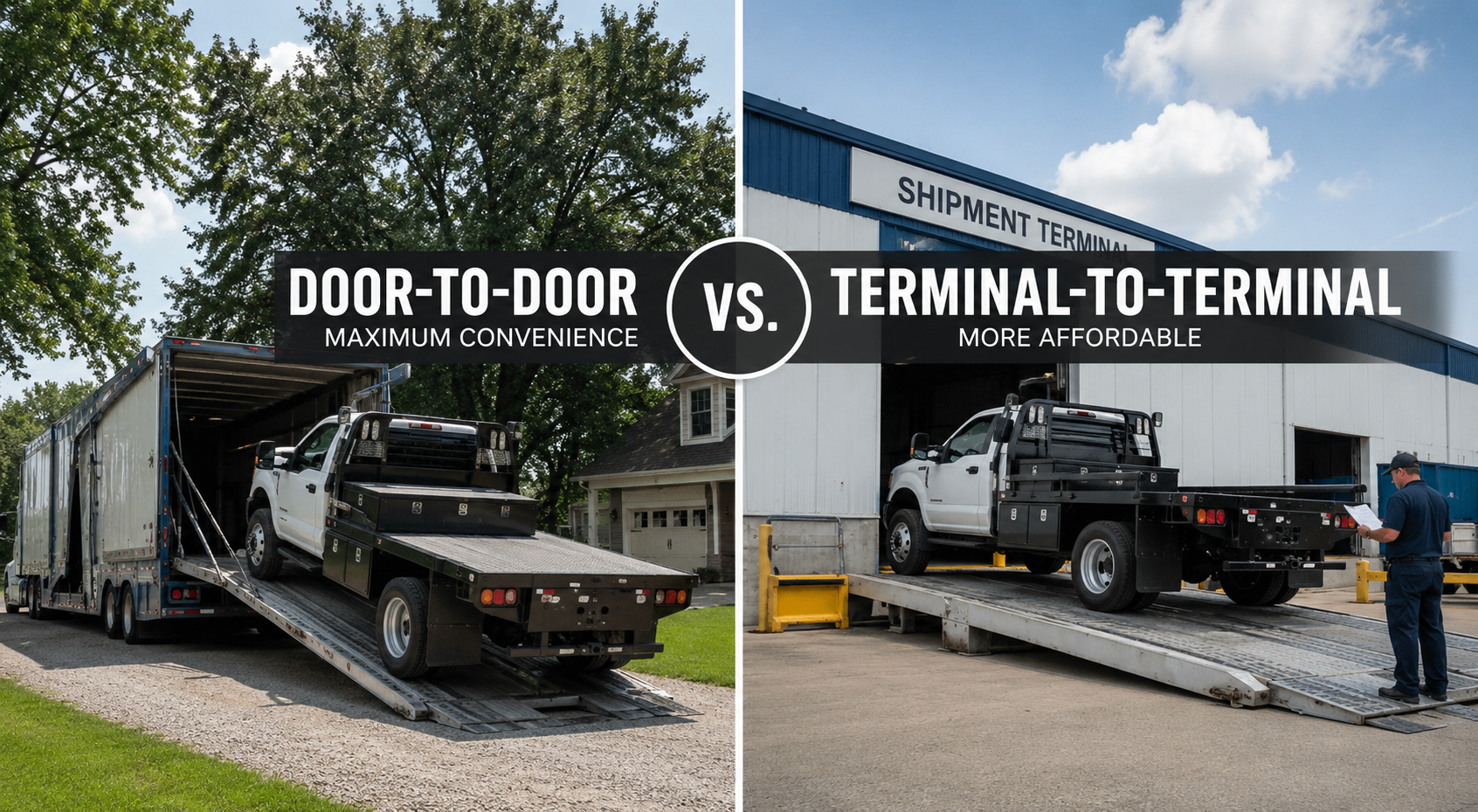
Once you’ve decided to ship a work truck instead of driving it home, there’s one more choice that affects both your cost and your convenience: door-to-door or terminal-to-terminal delivery. Both methods get your truck where it needs to go, but they work very differently, and picking the wrong one for your situation can mean unnecessary hassle or unnecessary cost. Here’s exactly how each one works and how to decide which makes more sense for your next truck purchase.
What Door-to-Door Shipping Actually Means
Door-to-door is exactly what it sounds like. In door-to-door car shipping, the carrier picks up and delivers your vehicle as close to your specified addresses as possible, often right to your driveway or street — eliminating the need to drive to or from a terminal yourself. The process is straightforward from the customer’s side: once your order is confirmed, your assigned carrier contacts you directly to arrange pickup details, then loads the truck at your location and delivers it to the address you specified.
This convenience extends to scheduling, too. It’s very common for carriers to pick up or deliver vehicles outside of traditional business hours — early morning, late evening, or even weekends — which is part of what makes door-to-door the most flexible method for working around a buyer’s schedule.
What Terminal-to-Terminal Shipping Actually Means
Terminal-to-terminal works differently. This method requires you to drop off and pick up your car at designated transport hubs known as terminals, rather than having the carrier come to your specific address. These terminals are typically fenced-in, secured yards, often located near airports or major highways, where carriers consolidate multiple vehicles before moving them in bulk between locations.
The tradeoff for that extra legwork is usually a lower price. This method can sometimes come at a lower price point because it requires less door-to-door logistics — though it entails more effort on your part to get your vehicle to and from the terminals.
The Cost Difference
Terminal-to-terminal is generally the cheaper of the two options, though the gap varies quite a bit by source and route. One estimate puts terminal shipping at $150–$250 less than door-to-door, depending on distance and demand, while another notes that terminal-to-terminal can cut costs by up to 30% compared to door-to-door service.
That said, the savings aren’t always as clean as they look on paper. Storage fees, often $25–$50 per day if you don’t pick up your truck promptly, can eat into what you saved by choosing the terminal option in the first place. And if the pickup and delivery locations are along interstates or in larger cities, the price difference may not be that much at all — the savings show up most when your route runs through rural or hard-to-access areas that would otherwise require the carrier to go out of their way for a direct delivery.
The Convenience Difference
This is really where the two methods diverge. Door-to-door minimizes your involvement almost entirely — your vehicle is picked up and delivered immediately with you being there, without the extra step of coordinating a separate trip to a facility.
Terminal-to-terminal asks more of you. Since you have to work on getting your vehicle to the terminal yourself and later pick it up from another terminal at the destination, this shipping method requires additional coordination and effort compared to door-to-door, especially if you’re not near a major hub already.
Location matters a lot here. Terminals are common near major cities but rare in rural areas, and reaching one may take hours in some parts of the country, which can add both time and hidden cost that offsets the lower sticker price of terminal shipping.
Speed: Door-to-Door Usually Wins
If timing matters to you, door-to-door tends to move faster overall. It’s typically 2–3 days faster than terminal shipping since your car doesn’t sit waiting for pickup or release at a facility — a truck sitting in a terminal yard, waiting for either you or the next leg of transport to arrive, adds dead time that a direct pickup and delivery simply avoids.
Which One Makes More Sense for a Work Truck?
For most buyers picking up a heavy-duty pickup, flatbed, or service truck, door-to-door tends to be the more practical choice, for a few reasons specific to how work trucks get used:
- You need the truck working, not sitting in a yard. A work truck is typically bought to go straight into service — hauling equipment, running a route, or getting a crew to a job site. Door-to-door transport is ideal for busy individuals, families relocating, car dealerships, and owners of high-value vehicles who prefer minimal handling and maximum care, and a business buyer waiting on a truck to start earning its keep fits squarely into that category.
- Terminal access isn’t guaranteed near where you actually work. Many businesses and job sites aren’t located near a major transport hub, which means the “savings” of terminal-to-terminal can get eaten up fast by drive time, fuel, and the hassle of coordinating a pickup trip during business hours.
- Less handling means less risk. With door-to-door shipping, your car stays with the carrier throughout the entire journey, reducing the risk of damage or theft that might occur at a terminal — a meaningful consideration on a truck you’re about to put straight to work and can’t afford to have sidelined for repairs before it even starts.
That said, terminal-to-terminal can still make sense in the right circumstances — particularly if you’re near a major city or interstate corridor where a terminal is genuinely convenient, or if you have flexible scheduling and want to shave a bit off the total cost. Terminal-to-terminal shipping requires you to drop off your vehicle at a designated terminal and pick it up from another terminal at the destination, and for buyers with the flexibility to work around that, it remains a legitimate way to save money.
Questions to Ask Before You Choose
Regardless of which method fits your situation, a few things are worth confirming with your shipper before booking:
- Is door-to-door actually available on my route? Some situations may prevent door-to-door service — residential zoning laws, weight restrictions, narrow streets, or low-hanging trees may prohibit large trucks from entering certain neighborhoods, in which case a nearby meeting point will be arranged instead.
- How far is the nearest terminal, really? If you’re leaning toward terminal-to-terminal to save money, confirm the actual distance and drive time before you commit — a terminal that’s “technically nearby” but still an hour or two away can quietly erase your savings.
- What are the storage fees if I can’t pick up right away? Ask upfront what the per-day storage cost looks like if your schedule doesn’t line up perfectly with your truck’s arrival at the terminal.
- What’s the real price difference for my specific route? The savings from terminal-to-terminal vary a lot by distance and location — get quotes for both methods before deciding, rather than assuming terminal is automatically cheaper.
Bottom Line
Door-to-door shipping trades a modestly higher price for speed, convenience, and less handling of your truck — a combination that usually makes sense for a work truck headed straight into daily use. Terminal-to-terminal can save real money, but it asks more of your time and only pays off cleanly if you’re near a terminal and have the flexibility to manage pickup and drop-off yourself.
Let Us Handle the Logistics
At True Blue Autos, we ship work trucks nationwide — everywhere except Alaska and Hawaii — and we’ll walk you through the right shipping method for your route, your budget, and your timeline before you ever commit to anything.
1661 N Michigan Ave, Greensburg, IN 47240
Call: (812) 222-8783
Contact True Blue Autos
Reach out today and let’s figure out the best way to get your next work truck home.
Frequently Asked Questions
What’s the basic difference between door-to-door and terminal-to-terminal shipping?
Door-to-door means the carrier picks up and delivers your vehicle as close to your specified addresses as possible, often right to your driveway. Terminal-to-terminal requires you to drop off and pick up your car at designated transport hubs instead, which means more coordination on your end but often a lower price.
Which option is cheaper?
Terminal-to-terminal is generally less expensive, though the exact savings vary by route. Some estimates put it at $150–$250 less than door-to-door, while others say it can cut costs by up to 30% depending on distance and demand. The savings tend to be biggest on routes through rural or hard-to-reach areas.
Are the terminal savings always worth it?
Not always. Storage fees, often $25–$50 per day if you don’t pick up the truck promptly, can eat into what you saved, and if your pickup and delivery points are already along interstates or in larger cities, the price difference between the two methods may not be significant at all.
Which method is faster?
Door-to-door is typically 2–3 days faster than terminal shipping, since your truck doesn’t sit waiting for pickup or release at a facility. That dead time at the terminal — waiting for either you or the next leg of transport — is what adds the extra days.
Is door-to-door available everywhere?
Not always. Some situations prevent door-to-door service — for example, residential zoning laws, weight restrictions, narrow streets, or low-hanging trees may keep a large truck from entering certain neighborhoods. In those cases, the carrier will arrange a nearby meeting point instead of your exact address.
Why would someone choose terminal-to-terminal instead?
It can make sense if you’re located near a major terminal already, have flexible scheduling, and want to shave some cost off the shipment. It also tends to work better for buyers who don’t need the truck immediately and don’t mind coordinating a separate pickup trip.
Is terminal-to-terminal shipping safe for the truck?
Generally yes — terminals are secure, fenced-in yards — but there’s a small added risk simply from extra handling and storage time compared to door-to-door, where the truck stays with the carrier the entire trip. For a truck you’re planning to put straight to work, minimizing handling is usually the safer bet.
Why does door-to-door usually make more sense for a work truck?
Work trucks are typically bought to go straight into service, so getting the truck delivered directly rather than sitting in a terminal yard means less downtime before it’s earning its keep. It also usually means less handling overall, which lowers the risk of damage before the truck ever gets to the job site.
What should I ask before choosing a shipping method?
Confirm whether door-to-door is actually available on your specific route, how far the nearest terminal is if you’re considering that option, what storage fees apply if you can’t pick up right away, and get quotes for both methods so you can compare the real price difference rather than assuming one is automatically cheaper.
Can I switch between the two if my plans change?
It’s best to decide before booking, since carriers plan routes and terminal space in advance. If your schedule or location changes, talk to your shipper as early as possible — they may be able to adjust, but last-minute changes can affect both cost and timing.