
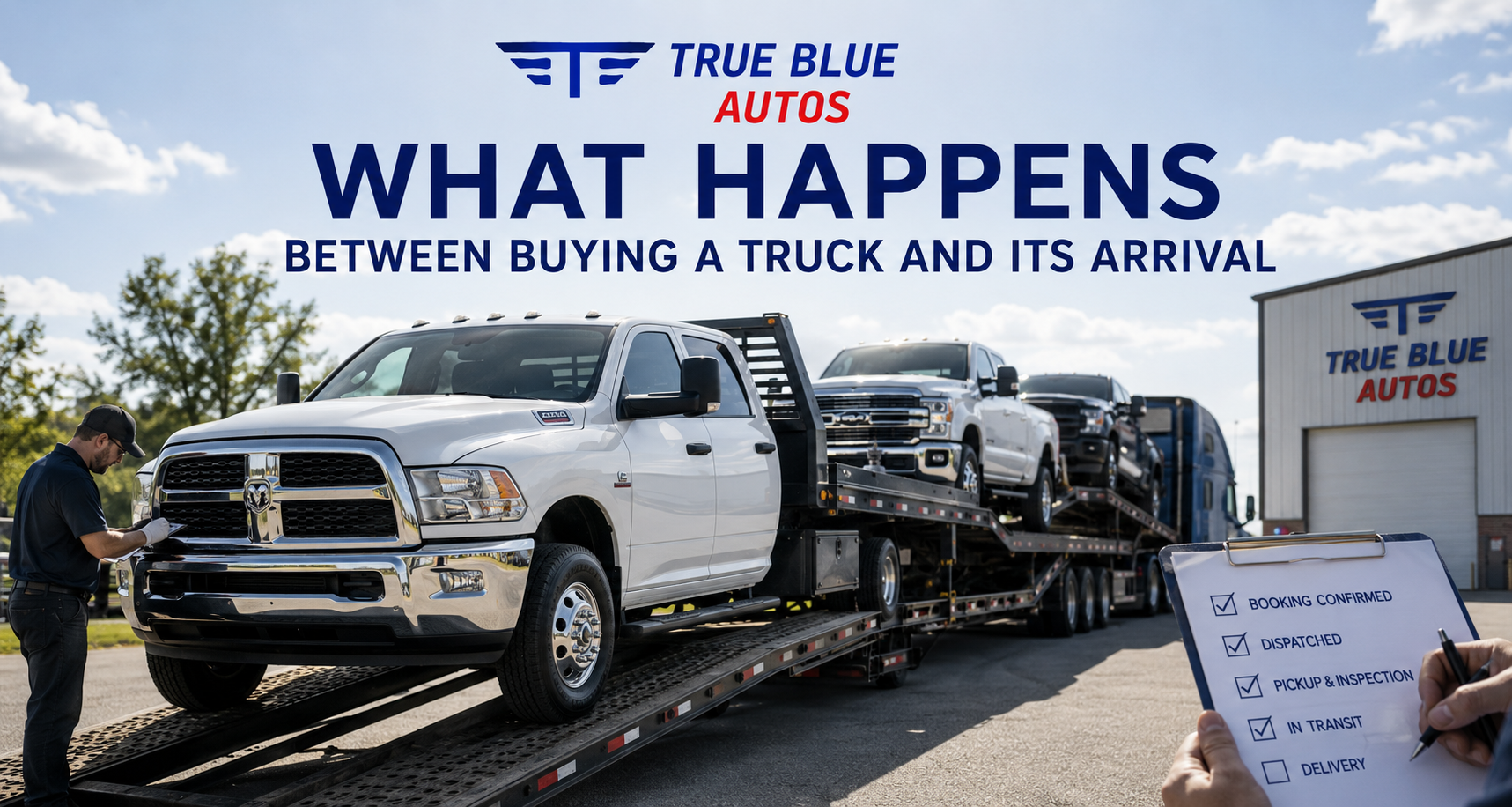
You’ve found the truck, agreed on a price, and signed the paperwork. So what actually happens next? For a lot of first-time out-of-state buyers, the gap between “I bought a truck” and “the truck is in my driveway” feels like a black box. In reality, it’s a fairly predictable sequence of steps — most auto transport follows a clear process: getting a quote, booking and assigning a carrier, completing paperwork, pickup and inspection, transit and tracking, and final delivery verification. Here’s exactly what happens at each stage, so you know what to expect and what to watch for along the way.
Stage 1: The Purchase Closes and Shipping Gets Booked
Once you’ve finalized the sale, shipping is typically the next thing to arrange — and the earlier you lock it in, the better. Booking as early as possible is important, ideally 7–14 days in advance, since this gives you better rates, more carrier options, and a smoother pickup process overall. Waiting until the last minute tends to backfire: many buyers assume they can book transport last-minute and still get the best rates, but in reality this often leads to higher prices and longer pickup windows.
To get moving, you’ll need to provide the basics: your pickup and delivery locations, vehicle make and model, preferred transport type, and target ship date. From there, the shipping company (or your dealer, if they’re coordinating shipping on your behalf) uses real-time route data and pricing trends to calculate your cost and start looking for a truck.
Stage 2: Order Review and Dispatch
Once your shipment is booked, it doesn’t hit the road immediately — there’s a short internal review first. This is the internal review stage where your shipment is prepared for dispatch, not a waiting period, but a quality-control step that ensures your details are accurate before a carrier is assigned. Even small inconsistencies, like an incorrect address or wrong vehicle size, can slow this stage down or limit carrier interest, so it’s worth double-checking your details at booking.
From there, the order enters dispatch, where carriers are sourced based on route, timing, and vehicle type. In practice, this means your shipment gets posted to a load board — a system used across the auto transport industry where vetted carriers review and accept available shipments along their active routes. Carrier assignment typically takes 24 to 72 hours for standard shipments, though it can move faster depending on how in-demand your route is.
A quick note on payment timing here, since it trips people up: in most cases, payment is collected at dispatch, once a carrier has accepted the load — not at initial booking and not after delivery. This structure exists to protect customers by tying payment to real carrier availability rather than estimates, so don’t be alarmed if you’re not charged the moment you book.
Stage 3: Preparing the Truck
While your shipment is being matched with a carrier, there’s a bit of prep work worth doing on the truck itself before pickup day arrives. A few basics that make the process smoother:
- Remove personal belongings. Personal items are not the responsibility of carriers and aren’t covered by cargo insurance, so anything left inside is at your own risk — and can add weight that creates compliance issues for the carrier.
- Document the truck’s current condition. Take photos before pickup — this gives you your own record to compare against later if anything looks different at delivery.
- Check fluids and the battery, and fill the tank to roughly a quarter — this minimizes weight and reduces any risk during transport.
- Disclose anything unusual in advance. If the truck is non-running or has modifications like a lift kit or unusually low ground clearance, this needs to be disclosed at booking — failing to disclose can result in added fees or even a canceled pickup once the driver arrives and finds a mismatch.
Stage 4: Pickup Window and the Dispatch Call
This is where a lot of first-time shippers get their expectations reset. Most people expect a specific appointment time, but that’s rarely how it actually works — carriers provide a pickup window, typically a 48-hour range, rather than an exact time slot. Traffic, weather, and delays at previous stops on the driver’s route make precise timestamps nearly impossible to guarantee.
As pickup approaches, expect a call to narrow things down. The driver or dispatcher will typically call 12 to 24 hours before arrival to give you a tighter window, so it’s worth keeping your phone accessible during this stretch of the process.
Stage 5: Pickup Day — Inspection and Loading
When the driver arrives, the first thing that happens is an inspection, not loading. The driver conducts a pre-transport inspection and completes the Bill of Lading, a document recording the truck’s condition at pickup, signed by both parties. This document matters more than almost anything else in the process — it’s a legal contract, a detailed receipt, and a condition report all in one, and it’s what protects you if anything goes wrong later.
Take this step seriously. When you sign the Bill of Lading, you’re confirming that the vehicle was received in the condition described and that any exceptions — damage, missing parts, anything unusual — are clearly noted. Don’t sign until every discrepancy is documented, since a rushed signature can make filing a claim later much harder.
Once the paperwork is done, loading begins. The driver checks clearance and begins the loading sequence, which usually involves hydraulic ramps, and depending on where the truck ends up positioned on the trailer, the process typically takes 30 to 45 minutes from arrival to departure. If you’re not available in person, you can designate a trusted representative to hand off the vehicle — they’ll sign the Bill of Lading and complete the inspection on your behalf, so just make sure whoever you choose actually takes the time to look the truck over carefully.
Stage 6: In Transit
Once loaded, your truck begins its trip — but it’s worth knowing it may not go in a straight line. Your truck may be moved several times during the trip as other vehicles are picked up or dropped off along the carrier’s route, since a single trailer typically carries several vehicles headed to different destinations, not just yours.
Most reputable shippers keep you updated during this stretch. You’ll typically receive real-time tracking updates by text, email, or phone, so you always know roughly where your vehicle is between pickup and delivery. Timing can still shift due to traffic, weather, or unloading delays at previous stops, which is normal — the FMCSA itself notes that transit times in auto transport are estimates rather than guarantees, a distinction reputable shippers communicate upfront rather than promising an exact delivery date.
Stage 7: The Delivery Call
As your truck gets close, expect the same kind of heads-up you got at pickup. The carrier will typically call ahead 12–24 hours in advance to coordinate a delivery time, and if your exact location isn’t accessible for a large carrier truck — some residential areas or job sites can be tricky — a nearby meeting point will be arranged instead.
Stage 8: Delivery Day — The Mirror-Image Inspection
Delivery inspection is essentially pickup inspection in reverse, and it deserves the same level of attention. Once the truck is off the trailer, you’ll compare its current condition against the original Bill of Lading, checking specifically for any new scratches, dents, or issues that weren’t there at pickup.
If you spot anything different, don’t let it slide. If you find something, document it immediately on the driver’s paperwork and take photos — this is the only way to effectively support a damage claim later. Once you’re satisfied that everything matches, you’ll sign the Bill of Lading, which signifies that you accept the truck and that the transport is officially complete. From that point, ownership and responsibility for the vehicle transfer fully back to you.
Stage 9: After the Truck Is in Your Driveway
Once the truck arrives, the shipping side of the process wraps up — but there are still a few loose ends to close depending on how your purchase was structured. If your dealer collected sales tax on your behalf, hold onto that documentation for when you register the truck locally. If the title hasn’t arrived yet, particularly on a financed truck, be patient, since financed vehicles often take several weeks for the lender to release the title. And if you noted anything during the delivery inspection, follow up with your shipper promptly rather than letting it sit — most companies ask that discrepancies get reported within 24 hours to keep any claim moving smoothly.
A Quick Timeline Recap
Putting it all together, here’s the general shape of the process from the moment you close the deal:
- Booking — shipping arranged, ideally 7-14 days before your target pickup date
- Order review and dispatch — carrier matched to your route, typically within 24-72 hours
- Prep — you get the truck ready and disclose any special conditions
- Pickup window — a range of days, narrowed to a tighter window as the driver approaches
- Pickup and loading — inspection, Bill of Lading, loading (roughly 30-45 minutes)
- Transit — anywhere from a few days to about two weeks depending on distance
- Delivery call — a heads-up 12-24 hours before arrival
- Delivery and inspection — the mirror image of pickup, signed off on the Bill of Lading
- Wrap-up — registration, title, and any final paperwork on your end
We Handle the Details So You Don’t Have To
Buying a truck out of state doesn’t have to feel like handing your vehicle into a black box. At True Blue Autos, we walk every customer through exactly what to expect at each stage — booking, pickup, transit, and delivery — and we ship work trucks nationwide, everywhere except Alaska and Hawaii.
1661 N Michigan Ave, Greensburg, IN 47240
Call: (812) 222-8783
Contact True Blue Autos
Reach out today, and let’s get your next work truck from “sold” to “sitting at your shop” without the guesswork.
Frequently Asked Questions
What’s the very first thing that happens after I buy the truck?
Shipping typically gets booked right after the sale closes. It’s best to do this as early as possible, ideally 7–14 days in advance, since booking early gets you better rates, more carrier options, and a smoother pickup process than waiting until the last minute.
Does my truck ship out immediately after I book?
Not quite. There’s a short internal review first to make sure your pickup and delivery details are accurate, followed by dispatch, where the shipment is matched with a carrier. Carrier assignment typically takes 24 to 72 hours for standard shipments before a truck is actually assigned to your route.
When do I actually pay for shipping?
Usually not at the moment you book. In most cases, payment is collected at dispatch, once a carrier has accepted the load — not upfront and not after delivery. This structure ties your payment to real carrier availability rather than an estimate.
What should I do to prep the truck before pickup?
Remove any personal belongings, since they aren’t covered by cargo insurance and can add unnecessary weight. It’s also worth taking your own photos of the truck’s condition, checking fluids and the battery, and disclosing anything unusual — like a non-running condition or aftermarket modifications — at booking so there are no surprises on pickup day.
Will I get an exact pickup time?
No — and that’s normal. Carriers work in windows, typically a 48-hour range, rather than an exact appointment time, since traffic, weather, and delays at previous stops make precise timestamps unreliable. Expect a call 12 to 24 hours before arrival to narrow that window down.
What happens when the driver actually arrives?
Before anything gets loaded, the driver inspects the truck and completes the Bill of Lading, a document recording its condition at pickup that both of you sign. Loading itself typically takes 30 to 45 minutes once that’s done.
Why does the Bill of Lading matter so much?
It’s the single most important document in the process — a legal contract, a receipt, and a condition report all in one. Signing it confirms the truck was received in the condition described, so it’s worth reviewing carefully and noting any discrepancies before you sign, since a rushed signature can make a later damage claim much harder to pursue.
Will my truck travel directly to me once it’s loaded?
Not necessarily. Your truck may be moved several times during the trip as other vehicles are picked up or dropped off along the carrier’s route, since a single trailer usually carries several vehicles headed to different final destinations, not just yours.
What happens at delivery?
It mirrors the pickup process. You’ll compare the truck’s current condition against the original Bill of Lading, checking for anything new, and sign off once you’re satisfied everything matches. If you do notice something different, document it immediately with notes and photos rather than signing off and dealing with it later.
What’s left to handle after the truck is delivered?
Mainly paperwork on your end — confirming sales tax documentation if your dealer collected it, following up if the title hasn’t arrived yet (especially on a financed truck, which can take several weeks), and reporting any delivery issues promptly, typically within 24 hours, if you noted anything during inspection.
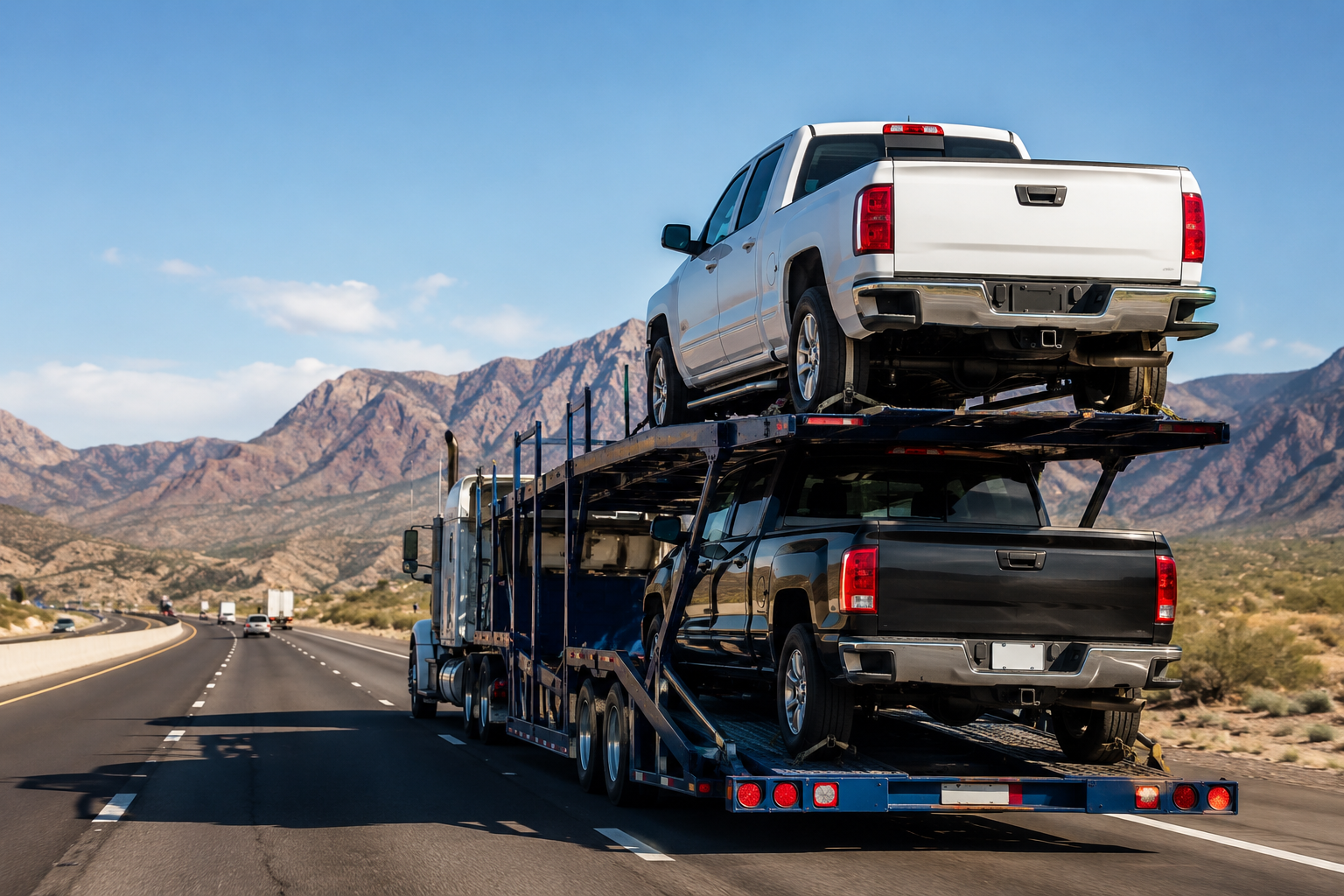
Once you’ve found the right work truck, the next question is almost always the same: what’s it actually going to cost to get it to you? Truck shipping costs aren’t a single flat number — they move based on distance, size, season, and a handful of other variables that are worth understanding before you request a quote. Here’s a realistic breakdown of what to expect when shipping a truck cross-country, and what actually moves the price up or down.
The Short Answer
For a standard truck shipment, the cost to ship a truck typically ranges from $800 to $1,700, with larger and heavier trucks running higher. Zoomed out across all vehicle types, most people shipping a vehicle cross-country pay somewhere between $1,200 and $1,800 for open transport, and coast-to-coast routes exceeding 2,500 miles can reach $1,200 to $1,500 or more depending on the route, timing, and carrier availability. Trucks specifically tend to sit at the upper end of these ranges — pickup trucks cost roughly 38% more to ship than standard cars simply because of the extra size and weight they add to the trailer.
Why the Cost-Per-Mile Actually Drops on Longer Trips
This surprises a lot of first-time shippers: a cross-country move usually costs less per mile than a short one. A 300-mile haul might run $1.40 to $2.20 per mile, while a 2,000-mile cross-country move can drop to $0.40 to $0.70 per mile. The reason comes down to fixed costs — a carrier’s fuel, time, and insurance expenses get spread across far more miles on a long haul, which lowers the effective rate even though the total invoice is higher.
That means a truck traveling from Indiana to California, while a bigger total number, may actually be a more efficient shipment on a per-mile basis than moving that same truck two states over.
What Actually Drives the Price
- Size and weight. This is the single biggest factor specific to trucks. Larger vehicles weigh more and take up more space on a transport trailer, and because carriers work within strict weight limits, a heavy-duty truck takes up room that could otherwise carry another vehicle — which is reflected directly in the price. As a rule of thumb, full-size trucks can run roughly 35-40% more than a standard car to ship.
- Distance and route popularity. Beyond the basic mileage, the specific route matters. Carriers running high-traffic interstate corridors typically offer the most competitive rates because trailer space fills quickly along established routes, while less common state-to-state routes or shipments involving rural pickup or delivery locations can add $100 to $300 to the total cost.
- Open vs. enclosed transport. Since most work trucks ship via open carrier, this is usually the affordable path already — but it’s worth knowing that enclosed transport typically costs 30% to 60% more than open shipping, so sticking with open transport (the standard choice for a working truck) keeps costs down without giving up meaningful protection.
- Operability. A truck that runs, steers, and brakes normally is far cheaper to ship than one that doesn’t. Inoperable vehicles require specialized equipment, such as a winch, to load them onto the truck, and that extra time and equipment typically adds $150 to $300 to the total cost.
- Season. Timing your shipment can meaningfully change the price. Prices are usually highest in spring and summer and lowest in late fall and winter, so a shipment scheduled outside the busy relocation season can come in noticeably cheaper.
- Pickup and delivery flexibility. Being flexible with your dates by even a few days can meaningfully lower your quote, since carriers prefer to fill their trucks efficiently before departing — a rigid, exact-day pickup window generally costs more than a 2-3 day window that gives the carrier room to plan.
A Rough Cost Snapshot by Distance
Based on typical 2026 market pricing for standard open transport:
- Under 500 miles: roughly $495–$650, though short routes often carry a higher per-mile rate
- 500–1,500 miles: roughly $850–$1,200, depending on route demand and vehicle size
- 1,500–2,500+ miles (true cross-country): roughly $1,200–$1,800 for open transport
Remember these are baseline ranges for a standard vehicle — a heavy-duty pickup, flatbed, or service truck will typically land above these figures given its extra size and weight.
Is Shipping Actually Worth It Compared to Driving?
For longer distances, the math tends to favor shipping once you account for everything else involved. For cross-country moves or long distances, shipping can actually save money once you factor in gas, hotels, meals, and time off work, and it’s also easier on the vehicle itself — a truck that’s shipped avoids the extra mileage and wear a multi-day drive would put on it before it’s even gone to work. For shorter, regional moves, driving may still make more sense, but once you’re talking 500 miles or more, shipping is often the smarter and less stressful option.
How to Keep Your Shipping Cost Down
A few practical levers that actually move the price:
- Book early and stay flexible. A wider pickup window gives carriers more scheduling options and can meaningfully lower your rate.
- Stick with open transport unless the truck genuinely needs extra protection — it remains the standard, cost-effective choice for work trucks.
- Avoid peak season if you can. Shipping in late fall or winter, rather than the busy spring-to-summer relocation window, tends to come in cheaper.
- Confirm the truck is operable before shipping, since a running, driving condition avoids the extra cost of specialized loading equipment.
- Compare a few quotes. Get quotes from multiple companies to ensure you’re getting the best deal, since pricing can vary meaningfully between brokers and carriers even for the same route.
What to Watch Out For
Not every quote you get will be trustworthy. Reputable carriers don’t demand full payment upfront — look for transparent deposits and clear cancellation policies instead. It’s also worth checking that any carrier is properly licensed: verify a company’s USDOT number and Motor Carrier (MC) number through the FMCSA database before booking, since legitimate operators will have both.
Get a Real Number for Your Next Work Truck
Every route is different, and the only way to know exactly what your truck will cost to ship is to get real numbers based on your specific pickup point, destination, and vehicle. At True Blue Autos, we ship work trucks nationwide — everywhere except Alaska and Hawaii — and our team will walk you through a clear, no-surprises quote before you commit to anything.
1661 N Michigan Ave, Greensburg, IN 47240
Call: (812) 222-8783
Contact True Blue Autos
Reach out today and let’s get your next work truck priced and on its way.
Frequently Asked Questions
How much does it typically cost to ship a truck across the country?
The cost to ship a truck typically ranges from $800 to $1,700, with larger and heavier trucks running toward the higher end. For a true cross-country move of 1,500 to 2,500+ miles, most people pay somewhere between $1,200 and $1,800 for standard open transport.
Why does shipping cost less per mile on longer trips?
It comes down to fixed costs. A carrier’s fuel, time, and insurance expenses get spread across more miles on a long haul, which lowers the effective rate — a 300-mile haul might run $1.40 to $2.20 per mile, while a 2,000-mile cross-country move can drop to $0.40 to $0.70 per mile. The total invoice is higher on a longer trip, but the per-mile rate is actually lower.
Why do trucks cost more to ship than regular cars?
Size and weight are the biggest factors. Pickup trucks cost roughly 38% more to ship than standard cars, since they’re heavier and take up more space on the trailer — and because carriers work within strict weight limits, a heavy truck can mean fewer total vehicles fit on that load, which affects pricing.
Does the specific route matter, or just the distance?
Both. Carriers running high-traffic interstate corridors typically offer more competitive rates because trailer space fills quickly along established routes, while less common routes or rural pickup and delivery locations can add $100 to $300 to the total cost.
Should I choose open or enclosed transport for a work truck?
Open transport is almost always the right call for a work truck. Enclosed transport typically costs 30% to 60% more than open shipping, and that extra protection isn’t necessary for a truck headed straight into daily job-site use rather than a garage or car show.
Does it matter if the truck is running or not?
Yes, significantly. A truck that runs, steers, and brakes normally is far cheaper to ship than one that doesn’t — inoperable vehicles require specialized equipment, such as a winch, to load them onto the trailer, which typically adds $150 to $300 to the total cost.
Is there a cheaper time of year to ship a truck?
Yes. Prices are usually highest in spring and summer and lowest in late fall and winter, so scheduling your shipment outside the busy relocation season can meaningfully reduce the cost.
Can I lower the cost by being flexible with pickup dates?
Definitely. Being flexible with your dates by even a few days can meaningfully lower your quote, since carriers prefer to fill their trucks efficiently before departing rather than working around one rigid pickup day.
Is it cheaper to just drive the truck myself instead of shipping it?
For shorter distances, maybe — but for longer moves, shipping can actually save money once you factor in gas, hotels, meals, and time off work, and it spares the truck the extra mileage and wear of a multi-day drive before it’s even gone to work. Past roughly 500 miles, shipping is often the more practical option.
How do I know a shipping company or quote is legitimate?
Check their credentials before booking. Verify a company’s USDOT number and Motor Carrier (MC) number through the FMCSA database, and be cautious of any carrier that demands full payment upfront — reputable companies use transparent deposits and clear cancellation policies instead.
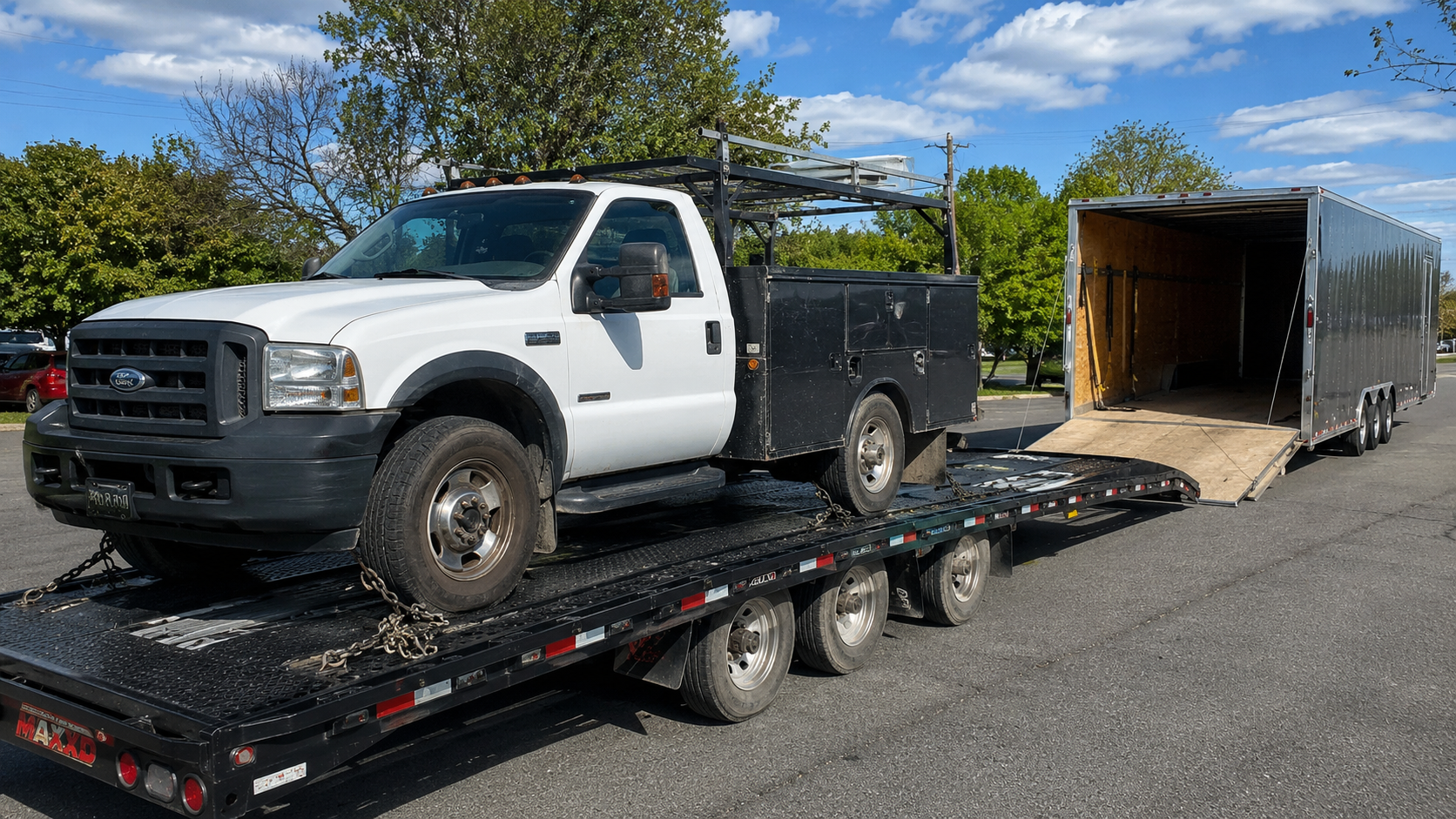
If you’re having a work truck shipped instead of driving it home yourself, one of the first questions you’ll run into is which type of trailer it rides on. There are two main options — open transport and enclosed transport — and the right choice depends less on personal preference and more on what kind of truck you’re shipping and what you’re using it for. Here’s how each method actually works, what it costs, and which one makes sense for a heavy-duty pickup, flatbed, or service truck headed to a job site rather than a showroom.
What Open Transport Actually Is
Open transport is the standard and most common way to move vehicles in the U.S., and it’s not close — nearly 90% of all auto transport shipments use open carriers. These are the double-decker trailers you see hauling rows of vehicles down the interstate every day. They’re typically two-tiered and capable of hauling between 7 to 10 vehicles at a time, which is exactly what keeps the price down: because multiple vehicles share the trailer, the cost per vehicle drops since it’s spread across everyone riding along.
The tradeoff is exposure. Vehicles on an open trailer are subject to weather, road dust, and debris the entire trip, since the trailer has no walls or roof. In practice, though, this is a manageable risk rather than a common problem — most vehicles shipped on open carriers arrive without incident, which is exactly why it’s the default choice for dealerships moving inventory and rental fleets relocating vehicles between locations.
What Enclosed Transport Actually Is
Enclosed transport moves your vehicle inside a fully covered trailer — walls, roof, the works — protecting it from weather, debris, and road elements for the entire trip. Because the trailer is covered, it can’t carry nearly as many vehicles at once: these trailers typically carry two to six vehicles at once, which means more attentive handling but a meaningfully higher cost per vehicle.
Enclosed carriers also tend to come with equipment built for vehicles that need gentler handling — hydraulic lift gates for low-clearance vehicles and soft-strap tie-downs that avoid contact with the vehicle’s body or undercarriage are both common. That’s part of why enclosed is the go-to choice for classic cars, exotics, and other vehicles where the goal is zero exposure, not just safe delivery.
The Cost Difference
This is usually the deciding factor, and it’s a big one. Enclosed transport typically runs 30 to 60 percent more than open shipping for the same route, and other estimates land in a similar range — enclosed transport can be 30–60% more expensive than open shipping in exchange for reduced risk of damage. Put in dollar terms, one industry analysis found enclosed shipping averaged around $1,500, roughly 40% more than the equivalent open transport quote.
For a work truck, that price gap matters more than it would for a weekend car. Spending several hundred extra dollars to protect a vehicle that’s about to spend its life hauling materials, parking at job sites, and picking up its fair share of dust and scratches on the job is a hard case to make.
Why Open Transport Is the Right Call for Most Work Trucks
A few things point clearly toward open transport when you’re shipping a heavy-duty pickup, flatbed, or service truck rather than a specialty vehicle:
- It’s built for everyday, working vehicles. Open transport tends to make sense when the vehicle is simply transportation — not a collector piece, not a restoration project, not something with rare trim or irreplaceable parts — and most everyday sedans, SUVs, and pickup trucks fall into exactly that category.
- It’s faster to book and schedule. Because there are far more open carriers on the road than enclosed ones, open shipping is more widely available and easier to schedule, with more flexible timing and often quicker turnaround than waiting for a specialized enclosed trailer.
- The exposure risk doesn’t line up with how the truck will be used. A truck headed straight into daily commercial use is going to face dirt, weather, and wear on the job site almost immediately. Minor exposure during a multi-day transport trip is a non-issue for a vehicle whose next chapter involves hauling equipment and working outdoors.
- Width can actually be a limiting factor. It’s worth noting that enclosed trailers are slightly narrower than open ones, so wider vehicles like trucks or large SUVs may not even qualify for enclosed shipping in the first place — another practical reason most work trucks end up on open carriers by default.
When Enclosed Transport Might Still Make Sense
There are a few edge cases worth knowing about, even if they’re the exception rather than the rule for work trucks:
- A heavily customized or highly specialized build. If the truck has custom bodywork, low ground clearance, or expensive aftermarket equipment that would be costly to repair, the added protection may be worth it.
- Extreme weather routes. Shipping routes longer than 1,000 miles, through winter weather, or through coastal salt exposure are situations where enclosed transport is worth considering regardless of vehicle type.
- High-value trucks. A brand-new, fully loaded Super Duty or specialty service truck with a high price tag might justify the extra cost the same way a luxury vehicle would.
For the vast majority of used work trucks, though, none of these apply — which is exactly why open transport remains the standard choice.
What to Check Before You Book Either Option
Regardless of which method you choose, a few things are worth confirming with your shipper before the truck ever gets loaded:
- Insurance coverage. Both open and enclosed carriers are required to carry cargo insurance, but coverage limits and claim processes can vary — ask for proof of insurance and coverage limits before booking, and don’t assume more expensive automatically means more coverage.
- A condition report at pickup and delivery. This documents any pre-existing damage before the truck loads and confirms its condition again at delivery — reviewing it carefully at both points is the only way to document a damage claim if something goes wrong in transit.
- Never sign off before inspecting the truck. Don’t sign delivery paperwork saying the vehicle was “received in good condition” if you notice any damage, since signing without notes can make a legitimate claim much harder to pursue later.
Bottom Line
For nearly every heavy-duty pickup, flatbed, or service truck, open transport is the practical, cost-effective choice — it’s faster to schedule, widely available, and perfectly suited to a vehicle that’s about to go straight to work. Enclosed transport earns its premium for classic, exotic, or highly specialized vehicles where absolute protection matters more than cost, which describes very few work trucks.
Get Your Work Truck Shipped the Right Way
At True Blue Autos, every work truck we ship nationwide goes out on a trusted, insured carrier — and our team will walk you through exactly what to expect from pickup to delivery. Whether you’re eyeing a flatbed, a Super Duty pickup, or a service truck, we’ll help you get it home without the guesswork.
1661 N Michigan Ave, Greensburg, IN 47240
Call: (812) 222-8783
Contact True Blue Autos
Reach out today and let’s get your next work truck on the road.
Frequently Asked Questions
What’s the main difference between open and enclosed transport?
The core difference is exposure. Open transport secures vehicles safely but leaves them exposed to environmental factors like weather and road debris, while enclosed transport minimizes these factors almost entirely by placing the vehicle inside a fully covered trailer. Both methods get your truck from point A to point B safely — they just differ in how much protection surrounds it along the way.
Which method is more common?
Open transport, by a wide margin. Nearly 90% of all auto transport shipments use open carriers, making it the standard choice for dealerships, rental fleets, and everyday buyers alike. Enclosed transport is the exception, generally reserved for vehicles that need extra protection.
How much more does enclosed transport cost?
Expect to pay significantly more. Enclosed transport typically runs 30 to 60 percent more than open shipping for the same route, and in dollar terms, industry data has put average enclosed shipping costs around $1,500, roughly 40% higher than the equivalent open transport quote.
Why is enclosed transport so much more expensive?
It comes down to capacity and equipment. Enclosed trailers typically carry only two to six vehicles at once, compared to seven to ten on an open trailer, so the cost of the trip gets spread across far fewer customers. Enclosed carriers also tend to include specialized equipment like hydraulic lift gates and soft-strap tie-downs, which adds to the cost of the service.
Is open transport safe for a work truck?
Yes. Most vehicles shipped on open carriers arrive without incident, and open transport is exactly what dealerships use to move their own inventory and what rental fleets use to relocate vehicles. For a truck that’s about to spend its life on job sites anyway, the minor weather and road-dust exposure during a multi-day transport trip is a non-issue.
When should I consider enclosed transport for a truck?
A few situations where it’s worth the extra cost: the truck has custom bodywork or expensive aftermarket equipment that would be costly to repair, the shipping route is long-distance through winter weather or coastal salt exposure, or the truck itself carries a high enough value that the added protection makes financial sense. For most used work trucks, none of these apply.
Can every truck even be shipped enclosed?
Not necessarily. Enclosed trailers are slightly narrower than open ones, so wider vehicles like trucks or large SUVs may not qualify for enclosed shipping at all. This is one more reason most work trucks end up on open carriers, regardless of preference.
Does my truck need extra insurance during transit either way?
Both open and enclosed carriers are required to carry cargo insurance, but coverage limits and claim processes can vary between carriers. It’s worth asking for proof of insurance and specific coverage limits before you book, rather than assuming a higher price automatically means more coverage.
What should I do when the truck is picked up and delivered?
Review the condition report carefully both times. A condition report documents any pre-existing damage before the truck is loaded and is checked again at delivery — it’s the only real way to document a damage claim if something goes wrong in transit. Never sign delivery paperwork confirming the truck was received in good condition if you actually notice damage, since signing without notes can make a legitimate claim much harder to pursue.
So which one should I choose for a work truck?
For nearly every heavy-duty pickup, flatbed, or service truck, open transport is the practical choice — it’s faster to schedule, more widely available, and well-suited to a vehicle headed straight into daily job-site use. Enclosed transport is worth the premium mainly for classic, exotic, or heavily customized vehicles where absolute protection matters more than cost.