
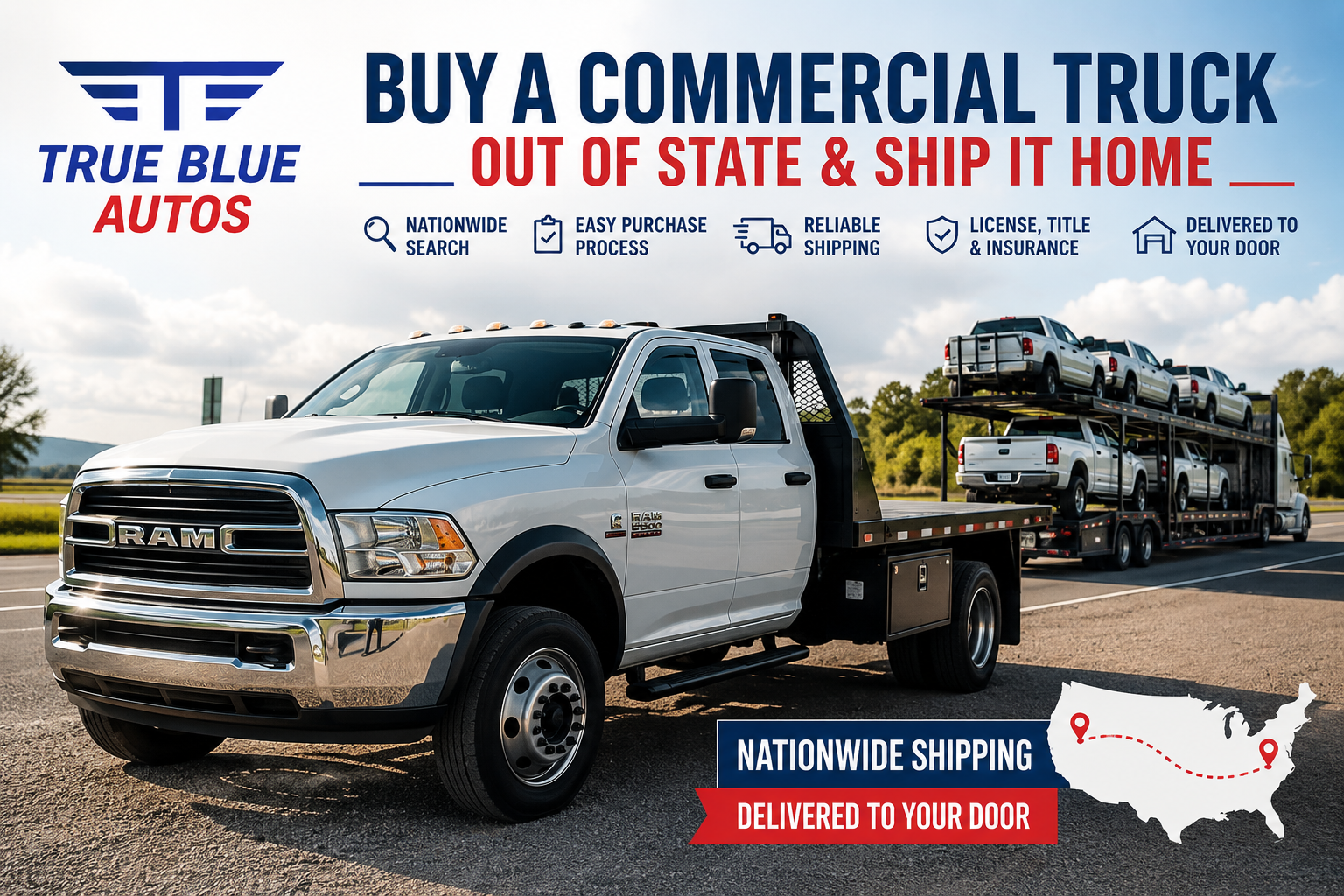
If the right work truck isn’t sitting on a lot near you, that shouldn’t stop you from buying it. More and more buyers — contractors, landscapers, small fleet owners, tradespeople — are shopping nationally instead of settling for whatever heavy-duty pickup or flatbed happens to be within driving distance. Buying used has changed too: shopping for a car has changed dramatically in recent years, and long gone are the days of spending your entire weekend going from one car lot to another, since with thousands of vehicles available all across the country, you can search for the exact truck you want from your couch. Here’s exactly how to buy a commercial work truck out of state, handle the paperwork, and get it shipped straight to your door.
Step 1: Know Why Shopping Out of State Makes Sense
There are a few real reasons buyers look beyond their home state for a work truck. Sometimes it’s simple economics — sometimes buying a car from a different state can be cheaper than the ones in your home state, though this isn’t guaranteed and depends heavily on local pricing in both markets. Other times it’s about spec: reasons for shopping out-of-state include looking for vehicles with specific features or equipment you want but that may not be available in your area — a flatbed with the exact bed length you need, or a service truck with the utility body configuration your crew actually uses, might only be sitting on a lot three states away.
Whatever the reason, the calculation is the same: weigh the savings or spec advantage against the extra cost of getting the truck home, and decide if it still comes out ahead of buying local.
Step 2: Verify the Truck Before You Commit
Buying a truck you can’t walk around in person means your due diligence has to work harder. A few non-negotiables:
- Pull a vehicle history report. If you’re buying a truck you haven’t seen, the first step should be ordering a vehicle history report — it’ll tell you when and where the truck was purchased and whether it’s ever been in an accident, along with any cosmetic or mechanical damage on record.
- Get real photos and, if possible, a mobile inspection. Ask for photos of the areas most likely to be worn — bed liners, hitch points, tires, undercarriage — and make sure the photos are recent so they reflect the truck’s current condition rather than how it looked when it was first listed.
- Lean on a dealer’s inspection process. Buying from an established dealership rather than a private seller typically means you get more help completing paperwork and some form of guarantee that the truck has already been inspected and is in good working order — which is exactly the kind of process a dealership tied to an auto body shop, doing its own inspections and detailing in-house, can offer.
- Confirm the title is clean. Make sure there are no outstanding liens before any money changes hands.
Step 3: Negotiate and Lock In the Deal
Once you’ve found the right truck, treat the negotiation the way you would any purchase where you can’t be there in person. The general process is to negotiate the out-the-door price by phone or email, and after you’ve reviewed an inspection report and agreed on a price, place a deposit and request a signed buyer’s order — that protects you from a last-minute price change once you’ve already committed to shipping.
A few things worth sorting out at this stage:
- Financing. If you’re not paying cash, get pre-approved before you finalize the deal so you know your real budget, including the extra costs like registration, shipping, and insurance that come on top of the purchase price.
- Trade-ins. If you’re trading in a vehicle, treat it as a separate transaction from the purchase — negotiating your trade-in value separately from the new purchase price generally gets you a fairer number than letting a dealer bundle the two together.
- Ask what the dealer handles. A dealership experienced in shipping vehicles nationwide should be able to tell you upfront whether they handle sales tax collection, registration paperwork, and shipping coordination — or which of those fall to you.
Step 4: Sort Out Sales Tax
This trips up a lot of first-time out-of-state buyers. Even if you’re buying from a state with no sales tax, you’re still required to pay tax in the state where you’ll register and drive the truck. If you’re buying from a dealer, this part is usually simple — the dealership should be able to collect the necessary taxes on your behalf for the state where you live and provide documentation showing it was paid.
It’s still worth double-checking the amount against your home state’s rate. If the wrong amount was collected, you’ll find out when you register the truck locally — you’ll either receive a credit or owe the difference at that point.
Step 5: Get Insurance Before the Truck Moves
Don’t wait until the truck is in your driveway to think about coverage. Every car needs valid proof of insurance to be operated on a public road, so make sure the truck is added to your policy before you finalize the purchase — most insurers will issue a temporary card right away, with the official one following by mail. Even if the truck is being shipped rather than driven, it’s worth protecting it in transit: consider comprehensive and collision coverage in case the truck is damaged, stolen, or vandalized while in transit, and know that liability coverage is typically required of any auto transport company hauling your vehicle to cover potential damage during the move.
Step 6: Choose How the Truck Gets to You
For work trucks in the pickup, flatbed, and service-truck range — as opposed to full Class 8 semis — you generally have two realistic options.
- Drive it home yourself. In most states, temporary plates are issued to allow a newly purchased vehicle to be driven home, so long as you have insurance in place first. This can work if the truck is a reasonable distance away and you don’t mind the road trip, but factor in fuel, lodging, and the extra mileage that goes straight onto a truck you just bought.
- Have it shipped. For most buyers, especially those getting a heavy-duty pickup or flatbed from several states away, shipping is simpler and puts less wear on the truck. Since your vehicle is located out of state, it can be convenient to have it shipped directly to you rather than scheduling a road trip, and many dealerships now offer this as a built-in service rather than leaving you to find a carrier on your own.
What shipping actually looks like. Work trucks in this weight class typically ship the same way passenger vehicles do — via open transport on a multi-car carrier — which keeps costs reasonable compared to specialized heavy-haul equipment needed for larger commercial rigs. Costs vary by distance and season, with rates generally running lower per mile the farther the truck travels, since fixed costs get spread over a longer haul.
What to have ready. Before a carrier can schedule pickup, they’ll need the truck’s year, make, and model, plus the exact pickup and delivery locations, since basic vehicle information is vital for planning the truck’s placement on the carrier.
Vetting the shipper. If your dealer doesn’t handle shipping directly, do some basic vetting on whoever does. A clean, itemized quote with a real delivery window is a good sign, while red flags include no clear delivery window, no proof of insurance or carrier credentials, no written confirmation of the rate, and requests for full payment upfront rather than a standard deposit-and-delivery arrangement.
Step 7: Register the Truck at Home
Once the truck arrives, you’ll need a small stack of paperwork to complete registration — generally a bill of sale, a properly signed and dated title, and any lender paperwork if the truck was financed. Getting your title and registration in order is usually straightforward when buying from an out-of-state dealer, since they typically handle the necessary paperwork for you rather than leaving you to track it all down yourself, the way you would with a private-party purchase.
If your title doesn’t show up right away — especially on a financed truck — be patient. If it’s coming from a bank, it can take several weeks, and your lienholder will be tracking it in the meantime.
Common Pitfalls to Avoid
- Skipping the inspection because the truck is far away and inconvenient to see in person.
- Assuming sales tax is handled without asking for documentation of what was actually collected.
- Letting a private seller arrange shipping — a dealer coordinating trusted, insured carriers is a safer bet than an individual seller handling logistics themselves.
- Wiring money before the title is confirmed clean.
- Not asking about extended coverage on a used work truck that’s about to go straight into daily commercial use.
Ready to Find Your Next Work Truck?
Shopping out of state opens up a much wider selection of heavy-duty pickups, flatbeds, and service trucks than sticking to what’s parked nearby — and True Blue Autos in Greensburg, Indiana makes it easy to get one delivered. They ship nationwide (everywhere except Alaska and Hawaii), offer financing and trade-in options, and every vehicle is inspected and detailed by their sister company, Enneking Auto Body, before it ever reaches you.
1661 N Michigan Ave, Greensburg, IN 47240
Call: (812) 222-8783
Contact True Blue Autos
Reach out today and let’s find the right work truck for your business.
Frequently Asked Questions
Can I really buy a commercial truck from another state and have it shipped to my door?
Yes. This is a common and straightforward process, especially when working with a dealership that already offers nationwide vehicle delivery. Since your vehicle is located out of state, it can be convenient to have it shipped directly to you rather than scheduling a road trip, and many dealerships build this into the buying process rather than leaving you to arrange it yourself.
Do I have to pay sales tax in the state where I buy the truck, or in my home state?
You pay sales tax in the state where you’ll register and drive the truck — not necessarily where you bought it. Even if you’re purchasing from a state with no sales tax, you’re still required to pay tax in the jurisdiction where you will be driving the truck. If you’re buying from a dealer, they can typically collect that tax on your behalf and provide documentation showing it was paid.
What if the dealer collects the wrong amount of sales tax?
It gets reconciled when you register the truck locally — you’ll either receive a credit or owe the difference at that point. It’s worth double-checking the collected amount against your home state’s rate before you finalize the purchase, just so there are no surprises at registration.
Can I drive the truck home myself instead of shipping it?
In most cases, yes, provided you get temporary tags. In most states, temporary plates are issued to allow a newly purchased vehicle to be driven home, but you’ll need active insurance coverage in place before taking it on the road. Whether driving makes sense comes down to distance — a short trip might be worth it, while a longer one usually favors shipping, both for cost and to avoid putting extra miles on a truck you just bought.
How is a work truck shipped, and how long does it take?
Heavy-duty pickups, flatbeds, and service trucks typically ship the same way passenger vehicles do — via open transport on a multi-car carrier — rather than requiring the specialized heavy-haul equipment larger commercial rigs need. Transit time and pricing depend mainly on distance and season, with cost per mile generally dropping the farther the truck travels since fixed costs spread across a longer haul.
Do I need insurance before the truck ships, even if I’m not driving it?
It’s strongly recommended. Every truck needs valid proof of insurance to be operated on a public road once it arrives, so it makes sense to have coverage in place before the purchase is finalized. It’s also worth carrying comprehensive and collision coverage during transit in case the truck is damaged, stolen, or vandalized on the way to you, since carriers typically only provide liability coverage for damage they cause.
Will I have to handle the title and registration paperwork myself?
Usually not, if you’re buying from a dealership. Getting your title and registration in order is generally straightforward when buying from an out-of-state dealer, since they typically handle the necessary paperwork for you. Private-party purchases put more of that burden on the buyer.
What if my truck was financed — how long until I get the title?
Be patient, especially if a lender is involved. If the title is coming from a bank, it can take several weeks to arrive, and your lienholder will keep track of its status in the meantime.
Can I trade in my current vehicle as part of an out-of-state purchase?
Yes, and most dealerships that ship nationwide will accept trade-ins as part of the deal. It’s best to treat the trade-in as its own transaction rather than letting the dealer bundle it into your new purchase price — negotiating the two separately generally gets you a fairer number on both ends.
How do I know the shipping company is legitimate?
Look for clear signs of professionalism before you commit: a specific delivery window, proof of insurance and carrier credentials, a written rate confirmation, and a real point of contact. Any shipper asking for full payment upfront, rather than a standard deposit-and-delivery arrangement, is worth a second look.