
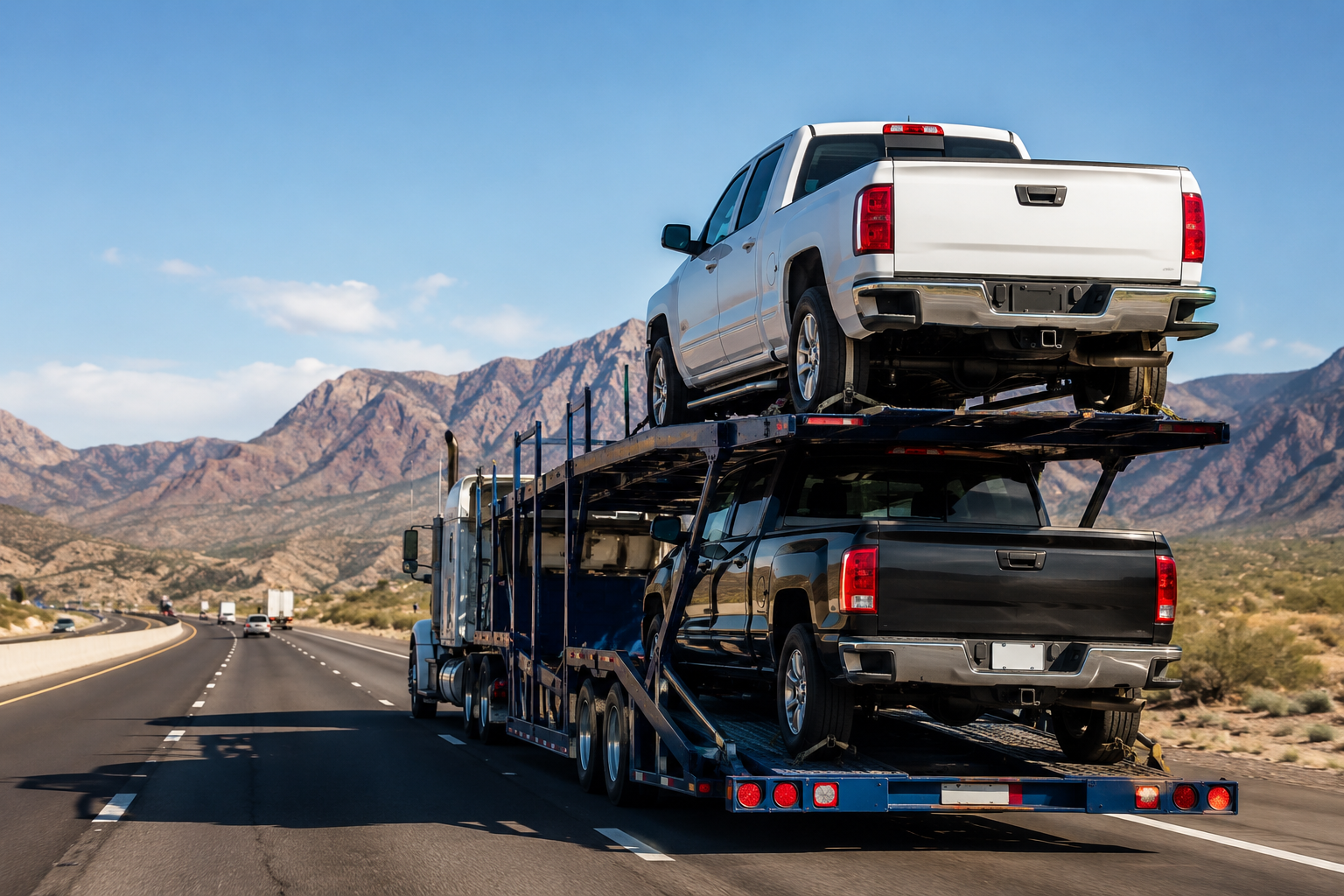
Once you’ve found the right work truck, the next question is almost always the same: what’s it actually going to cost to get it to you? Truck shipping costs aren’t a single flat number — they move based on distance, size, season, and a handful of other variables that are worth understanding before you request a quote. Here’s a realistic breakdown of what to expect when shipping a truck cross-country, and what actually moves the price up or down.
The Short Answer
For a standard truck shipment, the cost to ship a truck typically ranges from $800 to $1,700, with larger and heavier trucks running higher. Zoomed out across all vehicle types, most people shipping a vehicle cross-country pay somewhere between $1,200 and $1,800 for open transport, and coast-to-coast routes exceeding 2,500 miles can reach $1,200 to $1,500 or more depending on the route, timing, and carrier availability. Trucks specifically tend to sit at the upper end of these ranges — pickup trucks cost roughly 38% more to ship than standard cars simply because of the extra size and weight they add to the trailer.
Why the Cost-Per-Mile Actually Drops on Longer Trips
This surprises a lot of first-time shippers: a cross-country move usually costs less per mile than a short one. A 300-mile haul might run $1.40 to $2.20 per mile, while a 2,000-mile cross-country move can drop to $0.40 to $0.70 per mile. The reason comes down to fixed costs — a carrier’s fuel, time, and insurance expenses get spread across far more miles on a long haul, which lowers the effective rate even though the total invoice is higher.
That means a truck traveling from Indiana to California, while a bigger total number, may actually be a more efficient shipment on a per-mile basis than moving that same truck two states over.
What Actually Drives the Price
- Size and weight. This is the single biggest factor specific to trucks. Larger vehicles weigh more and take up more space on a transport trailer, and because carriers work within strict weight limits, a heavy-duty truck takes up room that could otherwise carry another vehicle — which is reflected directly in the price. As a rule of thumb, full-size trucks can run roughly 35-40% more than a standard car to ship.
- Distance and route popularity. Beyond the basic mileage, the specific route matters. Carriers running high-traffic interstate corridors typically offer the most competitive rates because trailer space fills quickly along established routes, while less common state-to-state routes or shipments involving rural pickup or delivery locations can add $100 to $300 to the total cost.
- Open vs. enclosed transport. Since most work trucks ship via open carrier, this is usually the affordable path already — but it’s worth knowing that enclosed transport typically costs 30% to 60% more than open shipping, so sticking with open transport (the standard choice for a working truck) keeps costs down without giving up meaningful protection.
- Operability. A truck that runs, steers, and brakes normally is far cheaper to ship than one that doesn’t. Inoperable vehicles require specialized equipment, such as a winch, to load them onto the truck, and that extra time and equipment typically adds $150 to $300 to the total cost.
- Season. Timing your shipment can meaningfully change the price. Prices are usually highest in spring and summer and lowest in late fall and winter, so a shipment scheduled outside the busy relocation season can come in noticeably cheaper.
- Pickup and delivery flexibility. Being flexible with your dates by even a few days can meaningfully lower your quote, since carriers prefer to fill their trucks efficiently before departing — a rigid, exact-day pickup window generally costs more than a 2-3 day window that gives the carrier room to plan.
A Rough Cost Snapshot by Distance
Based on typical 2026 market pricing for standard open transport:
- Under 500 miles: roughly $495–$650, though short routes often carry a higher per-mile rate
- 500–1,500 miles: roughly $850–$1,200, depending on route demand and vehicle size
- 1,500–2,500+ miles (true cross-country): roughly $1,200–$1,800 for open transport
Remember these are baseline ranges for a standard vehicle — a heavy-duty pickup, flatbed, or service truck will typically land above these figures given its extra size and weight.
Is Shipping Actually Worth It Compared to Driving?
For longer distances, the math tends to favor shipping once you account for everything else involved. For cross-country moves or long distances, shipping can actually save money once you factor in gas, hotels, meals, and time off work, and it’s also easier on the vehicle itself — a truck that’s shipped avoids the extra mileage and wear a multi-day drive would put on it before it’s even gone to work. For shorter, regional moves, driving may still make more sense, but once you’re talking 500 miles or more, shipping is often the smarter and less stressful option.
How to Keep Your Shipping Cost Down
A few practical levers that actually move the price:
- Book early and stay flexible. A wider pickup window gives carriers more scheduling options and can meaningfully lower your rate.
- Stick with open transport unless the truck genuinely needs extra protection — it remains the standard, cost-effective choice for work trucks.
- Avoid peak season if you can. Shipping in late fall or winter, rather than the busy spring-to-summer relocation window, tends to come in cheaper.
- Confirm the truck is operable before shipping, since a running, driving condition avoids the extra cost of specialized loading equipment.
- Compare a few quotes. Get quotes from multiple companies to ensure you’re getting the best deal, since pricing can vary meaningfully between brokers and carriers even for the same route.
What to Watch Out For
Not every quote you get will be trustworthy. Reputable carriers don’t demand full payment upfront — look for transparent deposits and clear cancellation policies instead. It’s also worth checking that any carrier is properly licensed: verify a company’s USDOT number and Motor Carrier (MC) number through the FMCSA database before booking, since legitimate operators will have both.
Get a Real Number for Your Next Work Truck
Every route is different, and the only way to know exactly what your truck will cost to ship is to get real numbers based on your specific pickup point, destination, and vehicle. At True Blue Autos, we ship work trucks nationwide — everywhere except Alaska and Hawaii — and our team will walk you through a clear, no-surprises quote before you commit to anything.
1661 N Michigan Ave, Greensburg, IN 47240
Call: (812) 222-8783
Contact True Blue Autos
Reach out today and let’s get your next work truck priced and on its way.
Frequently Asked Questions
How much does it typically cost to ship a truck across the country?
The cost to ship a truck typically ranges from $800 to $1,700, with larger and heavier trucks running toward the higher end. For a true cross-country move of 1,500 to 2,500+ miles, most people pay somewhere between $1,200 and $1,800 for standard open transport.
Why does shipping cost less per mile on longer trips?
It comes down to fixed costs. A carrier’s fuel, time, and insurance expenses get spread across more miles on a long haul, which lowers the effective rate — a 300-mile haul might run $1.40 to $2.20 per mile, while a 2,000-mile cross-country move can drop to $0.40 to $0.70 per mile. The total invoice is higher on a longer trip, but the per-mile rate is actually lower.
Why do trucks cost more to ship than regular cars?
Size and weight are the biggest factors. Pickup trucks cost roughly 38% more to ship than standard cars, since they’re heavier and take up more space on the trailer — and because carriers work within strict weight limits, a heavy truck can mean fewer total vehicles fit on that load, which affects pricing.
Does the specific route matter, or just the distance?
Both. Carriers running high-traffic interstate corridors typically offer more competitive rates because trailer space fills quickly along established routes, while less common routes or rural pickup and delivery locations can add $100 to $300 to the total cost.
Should I choose open or enclosed transport for a work truck?
Open transport is almost always the right call for a work truck. Enclosed transport typically costs 30% to 60% more than open shipping, and that extra protection isn’t necessary for a truck headed straight into daily job-site use rather than a garage or car show.
Does it matter if the truck is running or not?
Yes, significantly. A truck that runs, steers, and brakes normally is far cheaper to ship than one that doesn’t — inoperable vehicles require specialized equipment, such as a winch, to load them onto the trailer, which typically adds $150 to $300 to the total cost.
Is there a cheaper time of year to ship a truck?
Yes. Prices are usually highest in spring and summer and lowest in late fall and winter, so scheduling your shipment outside the busy relocation season can meaningfully reduce the cost.
Can I lower the cost by being flexible with pickup dates?
Definitely. Being flexible with your dates by even a few days can meaningfully lower your quote, since carriers prefer to fill their trucks efficiently before departing rather than working around one rigid pickup day.
Is it cheaper to just drive the truck myself instead of shipping it?
For shorter distances, maybe — but for longer moves, shipping can actually save money once you factor in gas, hotels, meals, and time off work, and it spares the truck the extra mileage and wear of a multi-day drive before it’s even gone to work. Past roughly 500 miles, shipping is often the more practical option.
How do I know a shipping company or quote is legitimate?
Check their credentials before booking. Verify a company’s USDOT number and Motor Carrier (MC) number through the FMCSA database, and be cautious of any carrier that demands full payment upfront — reputable companies use transparent deposits and clear cancellation policies instead.