
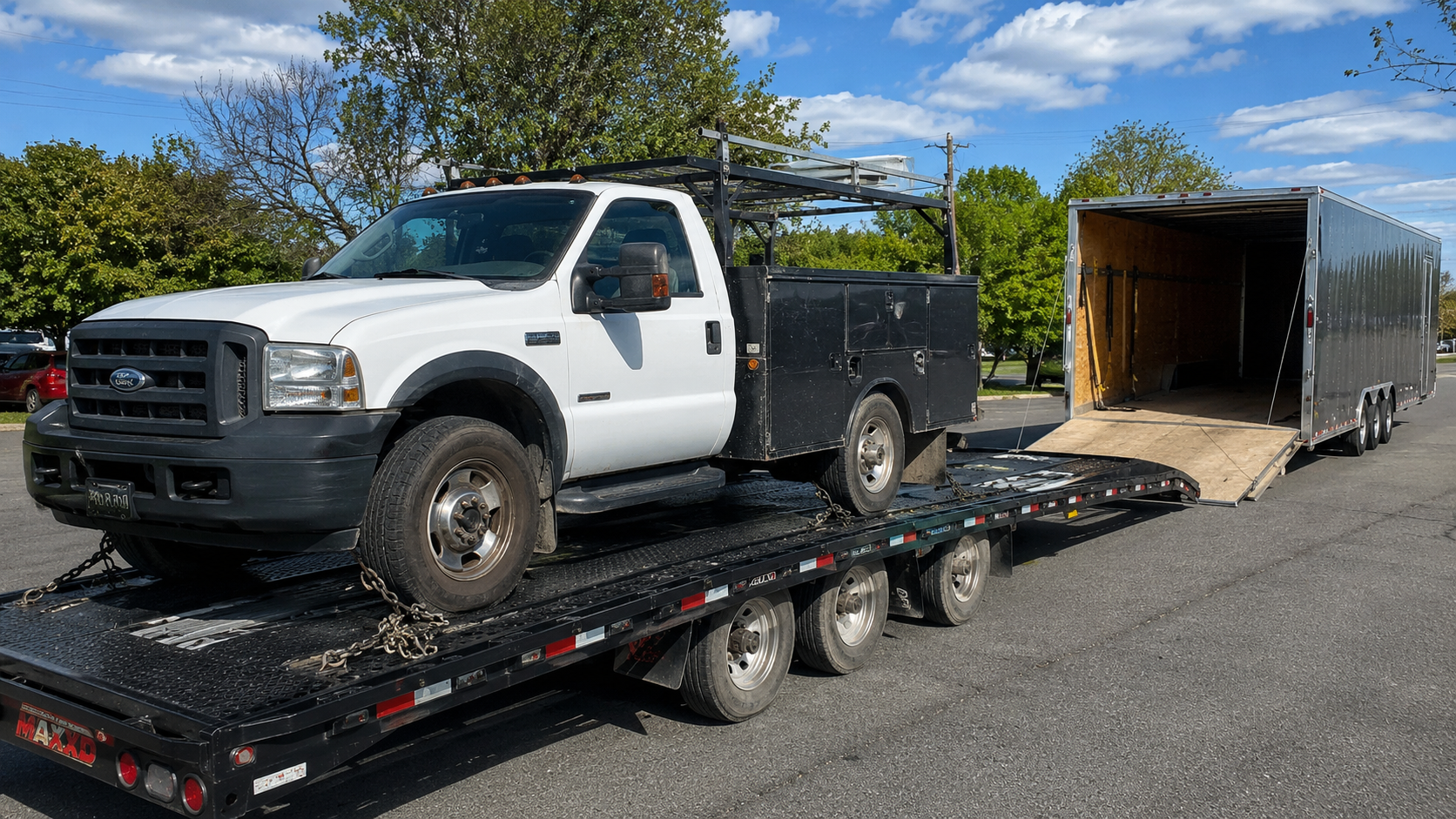
If you’re having a work truck shipped instead of driving it home yourself, one of the first questions you’ll run into is which type of trailer it rides on. There are two main options — open transport and enclosed transport — and the right choice depends less on personal preference and more on what kind of truck you’re shipping and what you’re using it for. Here’s how each method actually works, what it costs, and which one makes sense for a heavy-duty pickup, flatbed, or service truck headed to a job site rather than a showroom.
What Open Transport Actually Is
Open transport is the standard and most common way to move vehicles in the U.S., and it’s not close — nearly 90% of all auto transport shipments use open carriers. These are the double-decker trailers you see hauling rows of vehicles down the interstate every day. They’re typically two-tiered and capable of hauling between 7 to 10 vehicles at a time, which is exactly what keeps the price down: because multiple vehicles share the trailer, the cost per vehicle drops since it’s spread across everyone riding along.
The tradeoff is exposure. Vehicles on an open trailer are subject to weather, road dust, and debris the entire trip, since the trailer has no walls or roof. In practice, though, this is a manageable risk rather than a common problem — most vehicles shipped on open carriers arrive without incident, which is exactly why it’s the default choice for dealerships moving inventory and rental fleets relocating vehicles between locations.
What Enclosed Transport Actually Is
Enclosed transport moves your vehicle inside a fully covered trailer — walls, roof, the works — protecting it from weather, debris, and road elements for the entire trip. Because the trailer is covered, it can’t carry nearly as many vehicles at once: these trailers typically carry two to six vehicles at once, which means more attentive handling but a meaningfully higher cost per vehicle.
Enclosed carriers also tend to come with equipment built for vehicles that need gentler handling — hydraulic lift gates for low-clearance vehicles and soft-strap tie-downs that avoid contact with the vehicle’s body or undercarriage are both common. That’s part of why enclosed is the go-to choice for classic cars, exotics, and other vehicles where the goal is zero exposure, not just safe delivery.
The Cost Difference
This is usually the deciding factor, and it’s a big one. Enclosed transport typically runs 30 to 60 percent more than open shipping for the same route, and other estimates land in a similar range — enclosed transport can be 30–60% more expensive than open shipping in exchange for reduced risk of damage. Put in dollar terms, one industry analysis found enclosed shipping averaged around $1,500, roughly 40% more than the equivalent open transport quote.
For a work truck, that price gap matters more than it would for a weekend car. Spending several hundred extra dollars to protect a vehicle that’s about to spend its life hauling materials, parking at job sites, and picking up its fair share of dust and scratches on the job is a hard case to make.
Why Open Transport Is the Right Call for Most Work Trucks
A few things point clearly toward open transport when you’re shipping a heavy-duty pickup, flatbed, or service truck rather than a specialty vehicle:
- It’s built for everyday, working vehicles. Open transport tends to make sense when the vehicle is simply transportation — not a collector piece, not a restoration project, not something with rare trim or irreplaceable parts — and most everyday sedans, SUVs, and pickup trucks fall into exactly that category.
- It’s faster to book and schedule. Because there are far more open carriers on the road than enclosed ones, open shipping is more widely available and easier to schedule, with more flexible timing and often quicker turnaround than waiting for a specialized enclosed trailer.
- The exposure risk doesn’t line up with how the truck will be used. A truck headed straight into daily commercial use is going to face dirt, weather, and wear on the job site almost immediately. Minor exposure during a multi-day transport trip is a non-issue for a vehicle whose next chapter involves hauling equipment and working outdoors.
- Width can actually be a limiting factor. It’s worth noting that enclosed trailers are slightly narrower than open ones, so wider vehicles like trucks or large SUVs may not even qualify for enclosed shipping in the first place — another practical reason most work trucks end up on open carriers by default.
When Enclosed Transport Might Still Make Sense
There are a few edge cases worth knowing about, even if they’re the exception rather than the rule for work trucks:
- A heavily customized or highly specialized build. If the truck has custom bodywork, low ground clearance, or expensive aftermarket equipment that would be costly to repair, the added protection may be worth it.
- Extreme weather routes. Shipping routes longer than 1,000 miles, through winter weather, or through coastal salt exposure are situations where enclosed transport is worth considering regardless of vehicle type.
- High-value trucks. A brand-new, fully loaded Super Duty or specialty service truck with a high price tag might justify the extra cost the same way a luxury vehicle would.
For the vast majority of used work trucks, though, none of these apply — which is exactly why open transport remains the standard choice.
What to Check Before You Book Either Option
Regardless of which method you choose, a few things are worth confirming with your shipper before the truck ever gets loaded:
- Insurance coverage. Both open and enclosed carriers are required to carry cargo insurance, but coverage limits and claim processes can vary — ask for proof of insurance and coverage limits before booking, and don’t assume more expensive automatically means more coverage.
- A condition report at pickup and delivery. This documents any pre-existing damage before the truck loads and confirms its condition again at delivery — reviewing it carefully at both points is the only way to document a damage claim if something goes wrong in transit.
- Never sign off before inspecting the truck. Don’t sign delivery paperwork saying the vehicle was “received in good condition” if you notice any damage, since signing without notes can make a legitimate claim much harder to pursue later.
Bottom Line
For nearly every heavy-duty pickup, flatbed, or service truck, open transport is the practical, cost-effective choice — it’s faster to schedule, widely available, and perfectly suited to a vehicle that’s about to go straight to work. Enclosed transport earns its premium for classic, exotic, or highly specialized vehicles where absolute protection matters more than cost, which describes very few work trucks.
Get Your Work Truck Shipped the Right Way
At True Blue Autos, every work truck we ship nationwide goes out on a trusted, insured carrier — and our team will walk you through exactly what to expect from pickup to delivery. Whether you’re eyeing a flatbed, a Super Duty pickup, or a service truck, we’ll help you get it home without the guesswork.
1661 N Michigan Ave, Greensburg, IN 47240
Call: (812) 222-8783
Contact True Blue Autos
Reach out today and let’s get your next work truck on the road.
Frequently Asked Questions
What’s the main difference between open and enclosed transport?
The core difference is exposure. Open transport secures vehicles safely but leaves them exposed to environmental factors like weather and road debris, while enclosed transport minimizes these factors almost entirely by placing the vehicle inside a fully covered trailer. Both methods get your truck from point A to point B safely — they just differ in how much protection surrounds it along the way.
Which method is more common?
Open transport, by a wide margin. Nearly 90% of all auto transport shipments use open carriers, making it the standard choice for dealerships, rental fleets, and everyday buyers alike. Enclosed transport is the exception, generally reserved for vehicles that need extra protection.
How much more does enclosed transport cost?
Expect to pay significantly more. Enclosed transport typically runs 30 to 60 percent more than open shipping for the same route, and in dollar terms, industry data has put average enclosed shipping costs around $1,500, roughly 40% higher than the equivalent open transport quote.
Why is enclosed transport so much more expensive?
It comes down to capacity and equipment. Enclosed trailers typically carry only two to six vehicles at once, compared to seven to ten on an open trailer, so the cost of the trip gets spread across far fewer customers. Enclosed carriers also tend to include specialized equipment like hydraulic lift gates and soft-strap tie-downs, which adds to the cost of the service.
Is open transport safe for a work truck?
Yes. Most vehicles shipped on open carriers arrive without incident, and open transport is exactly what dealerships use to move their own inventory and what rental fleets use to relocate vehicles. For a truck that’s about to spend its life on job sites anyway, the minor weather and road-dust exposure during a multi-day transport trip is a non-issue.
When should I consider enclosed transport for a truck?
A few situations where it’s worth the extra cost: the truck has custom bodywork or expensive aftermarket equipment that would be costly to repair, the shipping route is long-distance through winter weather or coastal salt exposure, or the truck itself carries a high enough value that the added protection makes financial sense. For most used work trucks, none of these apply.
Can every truck even be shipped enclosed?
Not necessarily. Enclosed trailers are slightly narrower than open ones, so wider vehicles like trucks or large SUVs may not qualify for enclosed shipping at all. This is one more reason most work trucks end up on open carriers, regardless of preference.
Does my truck need extra insurance during transit either way?
Both open and enclosed carriers are required to carry cargo insurance, but coverage limits and claim processes can vary between carriers. It’s worth asking for proof of insurance and specific coverage limits before you book, rather than assuming a higher price automatically means more coverage.
What should I do when the truck is picked up and delivered?
Review the condition report carefully both times. A condition report documents any pre-existing damage before the truck is loaded and is checked again at delivery — it’s the only real way to document a damage claim if something goes wrong in transit. Never sign delivery paperwork confirming the truck was received in good condition if you actually notice damage, since signing without notes can make a legitimate claim much harder to pursue.
So which one should I choose for a work truck?
For nearly every heavy-duty pickup, flatbed, or service truck, open transport is the practical choice — it’s faster to schedule, more widely available, and well-suited to a vehicle headed straight into daily job-site use. Enclosed transport is worth the premium mainly for classic, exotic, or heavily customized vehicles where absolute protection matters more than cost.