
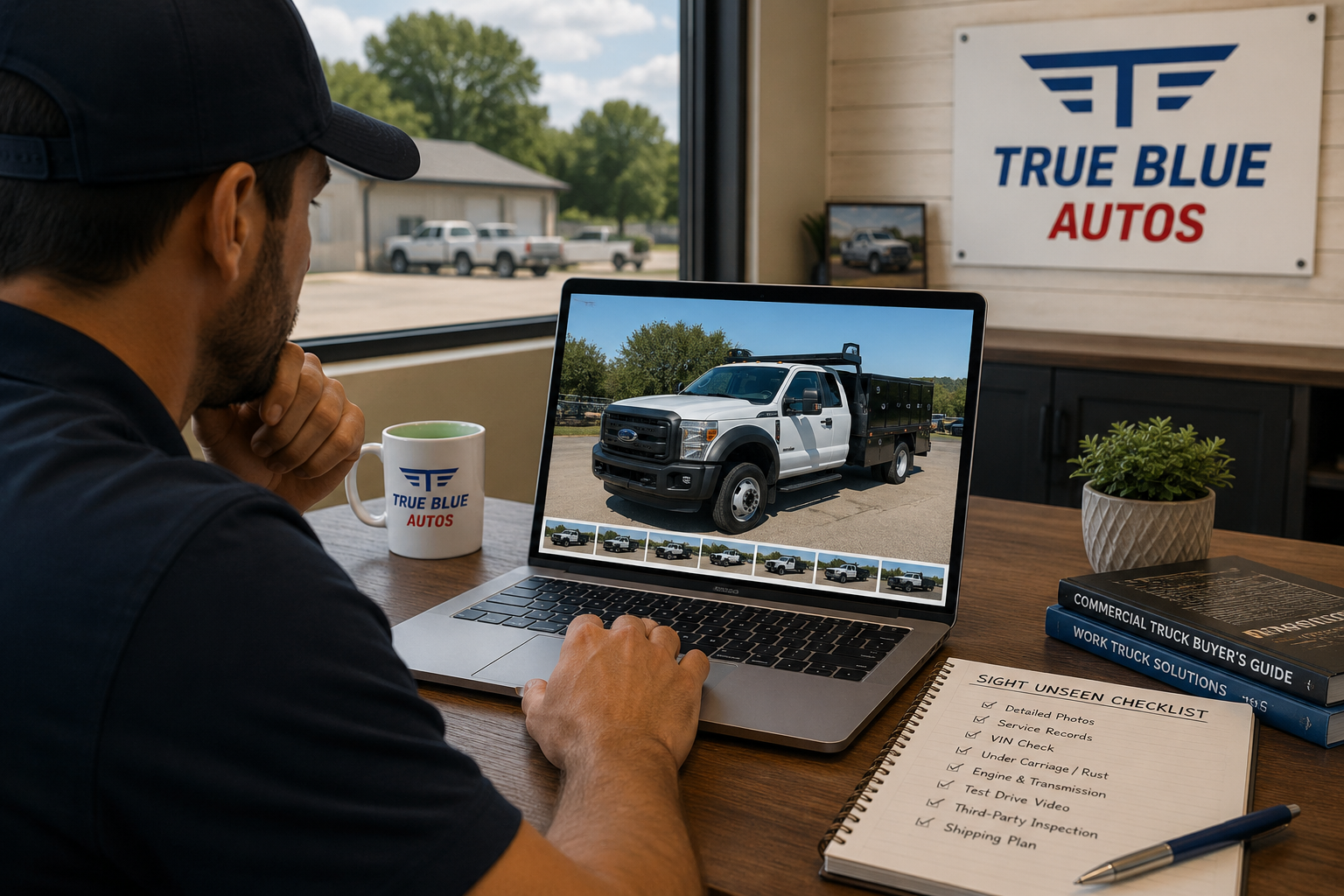
It’s a fair question — and probably one of the biggest hesitations buyers have before purchasing a work truck out of state. Handing over real money for a vehicle you’ve never walked around, sat in, or heard run feels like a leap of faith. The good news: buying sight unseen has become common and can be done safely, as long as you know what to check and who to trust. Here’s an honest look at the real risks, how to protect yourself, and why buying from a dealer changes the equation significantly compared to a private sale.
Why Sight-Unseen Buying Has Become So Common
This isn’t some fringe workaround anymore — it’s mainstream. In many cases, shoppers widen their search because local inventory is limited, especially for affordable used vehicles, and that trend has only accelerated as national listing sites make it easy to browse thousands of trucks at once. Cox Automotive reported that U.S. dealers had 2.13 million used vehicles in inventory in February 2026, equal to 42 days of supply — and vehicles priced below $15,000 had even tighter supply, at just 31 days. With fewer budget-friendly options sitting locally, more buyers are turning to nationwide listings and remote purchases simply to find the right truck at the right price.
Done carefully, this isn’t reckless — it’s just a different process with different checkpoints. Buying a car sight unseen means purchasing a vehicle without physically inspecting or test-driving it in person, relying instead on photos, videos, inspection reports, and conversations with the seller to evaluate its condition.
The Real Risks Worth Taking Seriously
It would be dishonest to pretend there’s no risk here. A handful of legitimate concerns come up again and again:
- Hidden mechanical or cosmetic issues. Without a hands-on look, you’re trusting someone else’s description and photos. If the vehicle arrives with problems, you might face a lengthy dispute process to seek a resolution — which is exactly why the verification steps below matter so much before money changes hands.
- Fraud, particularly from private sellers. This is where the real danger lives. Dishonest car sellers may claim to be too busy or far away to meet you, and may even offer a fake inspection report to convince you the vehicle is in working order — if it exists at all. Scammers specifically target buyers who never plan to see the vehicle in person, since a remote transaction gives them far more room to hide problems or disappear with a deposit.
- Title and lien issues. Always check for liens on the vehicle you intend to buy, since a lien gives a bank or lender legal claim to the truck for an unpaid debt — something that can create real headaches if it isn’t cleared before the sale closes.
- Odometer fraud. This is more common than most buyers realize. The National Highway Traffic Safety Administration estimates that more than 450,000 vehicles are sold annually with falsified odometer readings, a crime that costs American buyers over $1 billion a year — all the more reason to verify mileage independently rather than taking a listing at face value.
Why the Seller You’re Buying From Matters More Than Anything Else
This is the single biggest factor in how safe a sight-unseen purchase actually is. If you’re buying sight unseen, it’s generally more advantageous to do so from a dealer than a private seller, largely because you can much more easily verify the seller’s reputation. A licensed dealership has a physical address, a business history, online reviews, and accountability that a stranger on a classifieds site simply doesn’t.
Private-party sight-unseen deals carry the most risk by far. Serious buyers typically want to see a vehicle and ask questions before purchasing, and the same logic runs in reverse — a private seller who’s cagey about video calls, documentation, or answering direct questions is a red flag worth taking seriously, whether you’re the buyer or the seller in that scenario.
How to Protect Yourself Before You Buy
Whether you’re working with a dealer or a private party, a few concrete steps go a long way toward closing the gap that not seeing the truck in person leaves open:
- Get a vehicle history report. Request a detailed vehicle history report from a trusted provider such as Carfax or AutoCheck to check for accidents, title issues, flood damage, and mileage discrepancies before you commit to anything.
- Ask for real video, not just photos. A video walkaround gives you a much better sense of the vehicle’s actual condition than photos alone, and can reveal flaws that still images tend to hide — it also helps confirm the seller actually has physical access to the vehicle they’re describing.
- Arrange an independent inspection. This is arguably the single most valuable step you can take. Hire a trusted mechanic or third-party inspection service near the seller’s location to look the truck over before you finalize the deal — a professional inspection can catch issues that photos and a phone call never will.
- Verify the VIN and check for title problems. According to the National Insurance Crime Bureau, buyers should verify a vehicle’s VIN and check for title problems before purchasing a used vehicle online — a step that takes minutes and can save you from a costly title dispute down the road.
- Take your time. It’s tempting to rush once you’re ready to buy, but a short delay can uncover valuable facts about the dealer, warranty terms, or delivery conditions. Don’t let pressure to “act fast” push you past basic due diligence.
- Use a secure payment method. If you’re financing, get that lined up ahead of time. And regardless of how you’re paying, never wire money or share banking credentials directly with an individual seller — there’s never a legitimate reason for a seller to ask for your account credentials, even under the guise of receiving payment.
Red Flags That Should Make You Slow Down
A few warning signs are worth treating as hard stops, not minor annoyances:
- A seller who avoids video calls or refuses to answer specific questions about the truck’s condition or history.
- Pressure to pay immediately or skip an independent inspection to “lock in the deal.”
- Prices dramatically below market value. If something seems too good to be true, it probably is — an unusually low price relative to comparable listings is one of the clearest signals something’s off.
- A seller who insists on a specific inspector or inspection location. In some scams, fraudsters insist on a pre-purchase inspection done at a place of their choosing, then return a biased or fake report to pressure a lower price. Take control of the inspection process yourself.
- No verifiable business history. For a dealership, check reviews beyond the dealer’s own website — the Better Business Bureau, third-party review sites, and general search results can confirm whether a business has a real, consistent track record.
Why Buying From an Established Dealer Changes the Math
All of the risk described above assumes you’re navigating the process entirely on your own with a stranger. That calculation shifts considerably when you’re buying from a dealership with a physical location, a documented history, and a reputation to protect.
A reputable dealer typically has already done much of the verification work for you — pulling history reports, inspecting the vehicle, and standing behind the sale in a way an anonymous private seller simply can’t. It’s also worth remembering that reliable shipping support can make buying sight unseen far less stressful in general, since a trustworthy shipper adds another layer of documentation — inspection at pickup, inspection at delivery — on top of whatever the dealer has already verified.
Bottom Line
Buying a commercial truck you’ve never seen in person isn’t inherently risky — but buying one carelessly is. The combination of a documented vehicle history, an independent inspection, verified title status, and a seller with real accountability turns a sight-unseen purchase into a well-informed one rather than a gamble. The dealer you choose to work with matters just as much as the truck itself.
Buy With Confidence
At True Blue Autos, every truck in our inventory is inspected and detailed by our sister company, Enneking Auto Body, before it’s ever listed — and our team is happy to answer questions, share additional photos or video, and walk you through the truck’s history before you commit to anything.
1661 N Michigan Ave, Greensburg, IN 47240
Call: (812) 222-8783
Contact True Blue Autos
Reach out today — we’re here to answer every question before you buy, not just after.
Frequently Asked Questions
Is it actually safe to buy a truck sight unseen?
It can be, when done carefully. Buying sight unseen has become common as buyers search nationwide for the right vehicle at the right price, and with the right verification steps — history reports, video walkarounds, independent inspections — the risk can be managed effectively. The safety comes down more to who you’re buying from than the fact that you haven’t seen the truck in person.
What’s the biggest risk of buying a vehicle you haven’t seen?
Fraud from private sellers is the biggest concern. Dishonest sellers may claim to be too busy or far away to meet, and may even provide a fake inspection report to make a truck look better than it is. Buying from an established dealer with a real business history and accountability significantly reduces this risk compared to a private-party transaction.
Should I trust photos alone before buying?
No — always ask for real video in addition to photos. A video walkaround gives a much better sense of the vehicle’s actual condition than photos alone, and it also helps confirm the seller genuinely has physical access to the truck they’re describing.
Do I really need an independent inspection if I’m buying from a dealer?
It’s still a smart step, even with a reputable dealer, and it’s essential with a private seller. Hiring a trusted mechanic or third-party inspection service near the vehicle’s location can catch issues that photos and conversations never will — and it’s one of the most valuable protections you have in a remote purchase.
How do I check if a truck has a clean title?
Pull a vehicle history report from a trusted provider like Carfax or AutoCheck, and separately verify the VIN and check for title problems, since even a truck with a spotless-looking listing can carry an undisclosed lien or title issue.
What if I’m buying from a private seller instead of a dealer?
Take extra precautions. Verify the seller is who they say they are, ideally through a video call, and never send money through a wire transfer or share your banking credentials directly — there’s never a legitimate reason for a seller to request account access to receive payment.
What are the clearest red flags to watch for?
A seller who avoids video calls or dodges specific questions, pressure to pay immediately or skip an inspection, a price well below market value, or insistence on using a specific inspector of their choosing rather than one you select yourself. Any of these is a reason to slow down or walk away.
Why does buying from a dealership reduce the risk so much?
A licensed dealership has a physical address, a documented business history, and a reputation to protect — all things an anonymous private seller doesn’t have. Reputable dealers also typically handle much of the verification work upfront, including inspections and history reports, before a truck is ever listed for sale.
Does using a shipping company add any extra protection?
Yes, indirectly. A reliable shipper documents the vehicle’s condition at both pickup and delivery, which adds another layer of accountability on top of whatever verification the dealer has already done — giving you a paper trail if anything looks different once the truck arrives.
Is odometer fraud something I should actually worry about?
It’s more common than most buyers assume. The National Highway Traffic Safety Administration estimates over 450,000 vehicles are sold annually with falsified odometer readings, costing buyers more than $1 billion a year combined — which is exactly why an independent vehicle history report is worth running before every purchase, not just the ones that seem suspicious.
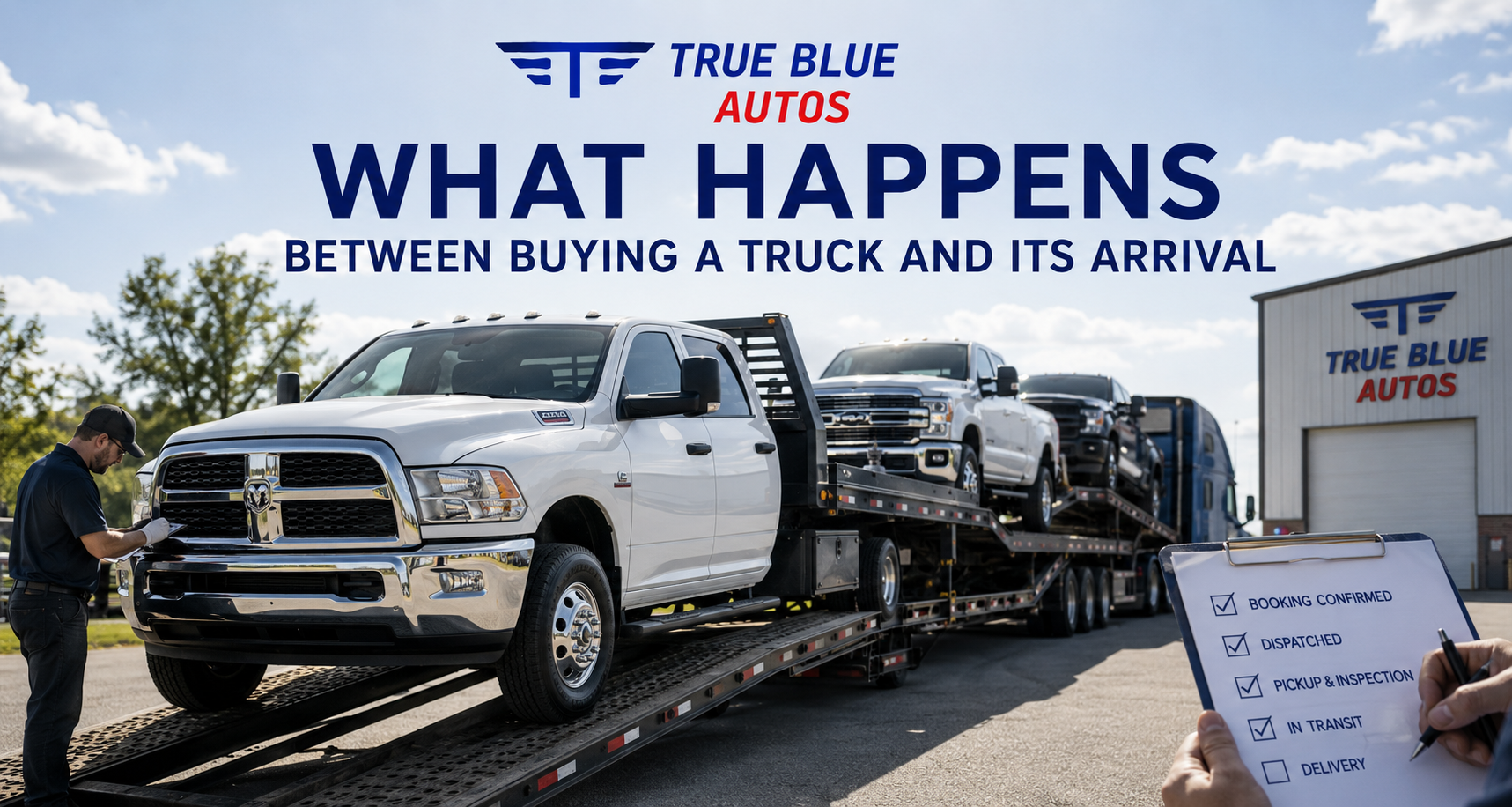
You’ve found the truck, agreed on a price, and signed the paperwork. So what actually happens next? For a lot of first-time out-of-state buyers, the gap between “I bought a truck” and “the truck is in my driveway” feels like a black box. In reality, it’s a fairly predictable sequence of steps — most auto transport follows a clear process: getting a quote, booking and assigning a carrier, completing paperwork, pickup and inspection, transit and tracking, and final delivery verification. Here’s exactly what happens at each stage, so you know what to expect and what to watch for along the way.
Stage 1: The Purchase Closes and Shipping Gets Booked
Once you’ve finalized the sale, shipping is typically the next thing to arrange — and the earlier you lock it in, the better. Booking as early as possible is important, ideally 7–14 days in advance, since this gives you better rates, more carrier options, and a smoother pickup process overall. Waiting until the last minute tends to backfire: many buyers assume they can book transport last-minute and still get the best rates, but in reality this often leads to higher prices and longer pickup windows.
To get moving, you’ll need to provide the basics: your pickup and delivery locations, vehicle make and model, preferred transport type, and target ship date. From there, the shipping company (or your dealer, if they’re coordinating shipping on your behalf) uses real-time route data and pricing trends to calculate your cost and start looking for a truck.
Stage 2: Order Review and Dispatch
Once your shipment is booked, it doesn’t hit the road immediately — there’s a short internal review first. This is the internal review stage where your shipment is prepared for dispatch, not a waiting period, but a quality-control step that ensures your details are accurate before a carrier is assigned. Even small inconsistencies, like an incorrect address or wrong vehicle size, can slow this stage down or limit carrier interest, so it’s worth double-checking your details at booking.
From there, the order enters dispatch, where carriers are sourced based on route, timing, and vehicle type. In practice, this means your shipment gets posted to a load board — a system used across the auto transport industry where vetted carriers review and accept available shipments along their active routes. Carrier assignment typically takes 24 to 72 hours for standard shipments, though it can move faster depending on how in-demand your route is.
A quick note on payment timing here, since it trips people up: in most cases, payment is collected at dispatch, once a carrier has accepted the load — not at initial booking and not after delivery. This structure exists to protect customers by tying payment to real carrier availability rather than estimates, so don’t be alarmed if you’re not charged the moment you book.
Stage 3: Preparing the Truck
While your shipment is being matched with a carrier, there’s a bit of prep work worth doing on the truck itself before pickup day arrives. A few basics that make the process smoother:
- Remove personal belongings. Personal items are not the responsibility of carriers and aren’t covered by cargo insurance, so anything left inside is at your own risk — and can add weight that creates compliance issues for the carrier.
- Document the truck’s current condition. Take photos before pickup — this gives you your own record to compare against later if anything looks different at delivery.
- Check fluids and the battery, and fill the tank to roughly a quarter — this minimizes weight and reduces any risk during transport.
- Disclose anything unusual in advance. If the truck is non-running or has modifications like a lift kit or unusually low ground clearance, this needs to be disclosed at booking — failing to disclose can result in added fees or even a canceled pickup once the driver arrives and finds a mismatch.
Stage 4: Pickup Window and the Dispatch Call
This is where a lot of first-time shippers get their expectations reset. Most people expect a specific appointment time, but that’s rarely how it actually works — carriers provide a pickup window, typically a 48-hour range, rather than an exact time slot. Traffic, weather, and delays at previous stops on the driver’s route make precise timestamps nearly impossible to guarantee.
As pickup approaches, expect a call to narrow things down. The driver or dispatcher will typically call 12 to 24 hours before arrival to give you a tighter window, so it’s worth keeping your phone accessible during this stretch of the process.
Stage 5: Pickup Day — Inspection and Loading
When the driver arrives, the first thing that happens is an inspection, not loading. The driver conducts a pre-transport inspection and completes the Bill of Lading, a document recording the truck’s condition at pickup, signed by both parties. This document matters more than almost anything else in the process — it’s a legal contract, a detailed receipt, and a condition report all in one, and it’s what protects you if anything goes wrong later.
Take this step seriously. When you sign the Bill of Lading, you’re confirming that the vehicle was received in the condition described and that any exceptions — damage, missing parts, anything unusual — are clearly noted. Don’t sign until every discrepancy is documented, since a rushed signature can make filing a claim later much harder.
Once the paperwork is done, loading begins. The driver checks clearance and begins the loading sequence, which usually involves hydraulic ramps, and depending on where the truck ends up positioned on the trailer, the process typically takes 30 to 45 minutes from arrival to departure. If you’re not available in person, you can designate a trusted representative to hand off the vehicle — they’ll sign the Bill of Lading and complete the inspection on your behalf, so just make sure whoever you choose actually takes the time to look the truck over carefully.
Stage 6: In Transit
Once loaded, your truck begins its trip — but it’s worth knowing it may not go in a straight line. Your truck may be moved several times during the trip as other vehicles are picked up or dropped off along the carrier’s route, since a single trailer typically carries several vehicles headed to different destinations, not just yours.
Most reputable shippers keep you updated during this stretch. You’ll typically receive real-time tracking updates by text, email, or phone, so you always know roughly where your vehicle is between pickup and delivery. Timing can still shift due to traffic, weather, or unloading delays at previous stops, which is normal — the FMCSA itself notes that transit times in auto transport are estimates rather than guarantees, a distinction reputable shippers communicate upfront rather than promising an exact delivery date.
Stage 7: The Delivery Call
As your truck gets close, expect the same kind of heads-up you got at pickup. The carrier will typically call ahead 12–24 hours in advance to coordinate a delivery time, and if your exact location isn’t accessible for a large carrier truck — some residential areas or job sites can be tricky — a nearby meeting point will be arranged instead.
Stage 8: Delivery Day — The Mirror-Image Inspection
Delivery inspection is essentially pickup inspection in reverse, and it deserves the same level of attention. Once the truck is off the trailer, you’ll compare its current condition against the original Bill of Lading, checking specifically for any new scratches, dents, or issues that weren’t there at pickup.
If you spot anything different, don’t let it slide. If you find something, document it immediately on the driver’s paperwork and take photos — this is the only way to effectively support a damage claim later. Once you’re satisfied that everything matches, you’ll sign the Bill of Lading, which signifies that you accept the truck and that the transport is officially complete. From that point, ownership and responsibility for the vehicle transfer fully back to you.
Stage 9: After the Truck Is in Your Driveway
Once the truck arrives, the shipping side of the process wraps up — but there are still a few loose ends to close depending on how your purchase was structured. If your dealer collected sales tax on your behalf, hold onto that documentation for when you register the truck locally. If the title hasn’t arrived yet, particularly on a financed truck, be patient, since financed vehicles often take several weeks for the lender to release the title. And if you noted anything during the delivery inspection, follow up with your shipper promptly rather than letting it sit — most companies ask that discrepancies get reported within 24 hours to keep any claim moving smoothly.
A Quick Timeline Recap
Putting it all together, here’s the general shape of the process from the moment you close the deal:
- Booking — shipping arranged, ideally 7-14 days before your target pickup date
- Order review and dispatch — carrier matched to your route, typically within 24-72 hours
- Prep — you get the truck ready and disclose any special conditions
- Pickup window — a range of days, narrowed to a tighter window as the driver approaches
- Pickup and loading — inspection, Bill of Lading, loading (roughly 30-45 minutes)
- Transit — anywhere from a few days to about two weeks depending on distance
- Delivery call — a heads-up 12-24 hours before arrival
- Delivery and inspection — the mirror image of pickup, signed off on the Bill of Lading
- Wrap-up — registration, title, and any final paperwork on your end
We Handle the Details So You Don’t Have To
Buying a truck out of state doesn’t have to feel like handing your vehicle into a black box. At True Blue Autos, we walk every customer through exactly what to expect at each stage — booking, pickup, transit, and delivery — and we ship work trucks nationwide, everywhere except Alaska and Hawaii.
1661 N Michigan Ave, Greensburg, IN 47240
Call: (812) 222-8783
Contact True Blue Autos
Reach out today, and let’s get your next work truck from “sold” to “sitting at your shop” without the guesswork.
Frequently Asked Questions
What’s the very first thing that happens after I buy the truck?
Shipping typically gets booked right after the sale closes. It’s best to do this as early as possible, ideally 7–14 days in advance, since booking early gets you better rates, more carrier options, and a smoother pickup process than waiting until the last minute.
Does my truck ship out immediately after I book?
Not quite. There’s a short internal review first to make sure your pickup and delivery details are accurate, followed by dispatch, where the shipment is matched with a carrier. Carrier assignment typically takes 24 to 72 hours for standard shipments before a truck is actually assigned to your route.
When do I actually pay for shipping?
Usually not at the moment you book. In most cases, payment is collected at dispatch, once a carrier has accepted the load — not upfront and not after delivery. This structure ties your payment to real carrier availability rather than an estimate.
What should I do to prep the truck before pickup?
Remove any personal belongings, since they aren’t covered by cargo insurance and can add unnecessary weight. It’s also worth taking your own photos of the truck’s condition, checking fluids and the battery, and disclosing anything unusual — like a non-running condition or aftermarket modifications — at booking so there are no surprises on pickup day.
Will I get an exact pickup time?
No — and that’s normal. Carriers work in windows, typically a 48-hour range, rather than an exact appointment time, since traffic, weather, and delays at previous stops make precise timestamps unreliable. Expect a call 12 to 24 hours before arrival to narrow that window down.
What happens when the driver actually arrives?
Before anything gets loaded, the driver inspects the truck and completes the Bill of Lading, a document recording its condition at pickup that both of you sign. Loading itself typically takes 30 to 45 minutes once that’s done.
Why does the Bill of Lading matter so much?
It’s the single most important document in the process — a legal contract, a receipt, and a condition report all in one. Signing it confirms the truck was received in the condition described, so it’s worth reviewing carefully and noting any discrepancies before you sign, since a rushed signature can make a later damage claim much harder to pursue.
Will my truck travel directly to me once it’s loaded?
Not necessarily. Your truck may be moved several times during the trip as other vehicles are picked up or dropped off along the carrier’s route, since a single trailer usually carries several vehicles headed to different final destinations, not just yours.
What happens at delivery?
It mirrors the pickup process. You’ll compare the truck’s current condition against the original Bill of Lading, checking for anything new, and sign off once you’re satisfied everything matches. If you do notice something different, document it immediately with notes and photos rather than signing off and dealing with it later.
What’s left to handle after the truck is delivered?
Mainly paperwork on your end — confirming sales tax documentation if your dealer collected it, following up if the title hasn’t arrived yet (especially on a financed truck, which can take several weeks), and reporting any delivery issues promptly, typically within 24 hours, if you noted anything during inspection.
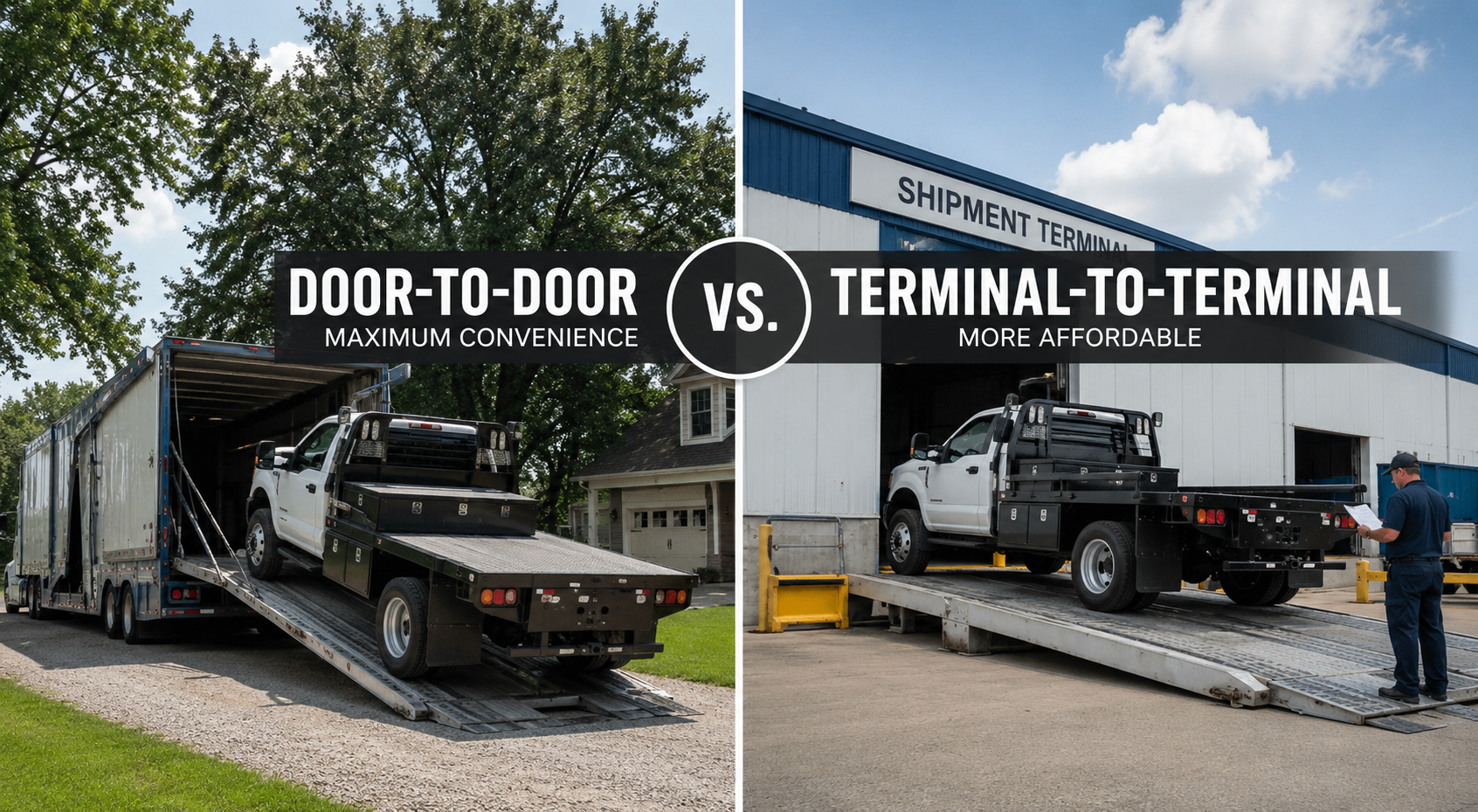
Once you’ve decided to ship a work truck instead of driving it home, there’s one more choice that affects both your cost and your convenience: door-to-door or terminal-to-terminal delivery. Both methods get your truck where it needs to go, but they work very differently, and picking the wrong one for your situation can mean unnecessary hassle or unnecessary cost. Here’s exactly how each one works and how to decide which makes more sense for your next truck purchase.
What Door-to-Door Shipping Actually Means
Door-to-door is exactly what it sounds like. In door-to-door car shipping, the carrier picks up and delivers your vehicle as close to your specified addresses as possible, often right to your driveway or street — eliminating the need to drive to or from a terminal yourself. The process is straightforward from the customer’s side: once your order is confirmed, your assigned carrier contacts you directly to arrange pickup details, then loads the truck at your location and delivers it to the address you specified.
This convenience extends to scheduling, too. It’s very common for carriers to pick up or deliver vehicles outside of traditional business hours — early morning, late evening, or even weekends — which is part of what makes door-to-door the most flexible method for working around a buyer’s schedule.
What Terminal-to-Terminal Shipping Actually Means
Terminal-to-terminal works differently. This method requires you to drop off and pick up your car at designated transport hubs known as terminals, rather than having the carrier come to your specific address. These terminals are typically fenced-in, secured yards, often located near airports or major highways, where carriers consolidate multiple vehicles before moving them in bulk between locations.
The tradeoff for that extra legwork is usually a lower price. This method can sometimes come at a lower price point because it requires less door-to-door logistics — though it entails more effort on your part to get your vehicle to and from the terminals.
The Cost Difference
Terminal-to-terminal is generally the cheaper of the two options, though the gap varies quite a bit by source and route. One estimate puts terminal shipping at $150–$250 less than door-to-door, depending on distance and demand, while another notes that terminal-to-terminal can cut costs by up to 30% compared to door-to-door service.
That said, the savings aren’t always as clean as they look on paper. Storage fees, often $25–$50 per day if you don’t pick up your truck promptly, can eat into what you saved by choosing the terminal option in the first place. And if the pickup and delivery locations are along interstates or in larger cities, the price difference may not be that much at all — the savings show up most when your route runs through rural or hard-to-access areas that would otherwise require the carrier to go out of their way for a direct delivery.
The Convenience Difference
This is really where the two methods diverge. Door-to-door minimizes your involvement almost entirely — your vehicle is picked up and delivered immediately with you being there, without the extra step of coordinating a separate trip to a facility.
Terminal-to-terminal asks more of you. Since you have to work on getting your vehicle to the terminal yourself and later pick it up from another terminal at the destination, this shipping method requires additional coordination and effort compared to door-to-door, especially if you’re not near a major hub already.
Location matters a lot here. Terminals are common near major cities but rare in rural areas, and reaching one may take hours in some parts of the country, which can add both time and hidden cost that offsets the lower sticker price of terminal shipping.
Speed: Door-to-Door Usually Wins
If timing matters to you, door-to-door tends to move faster overall. It’s typically 2–3 days faster than terminal shipping since your car doesn’t sit waiting for pickup or release at a facility — a truck sitting in a terminal yard, waiting for either you or the next leg of transport to arrive, adds dead time that a direct pickup and delivery simply avoids.
Which One Makes More Sense for a Work Truck?
For most buyers picking up a heavy-duty pickup, flatbed, or service truck, door-to-door tends to be the more practical choice, for a few reasons specific to how work trucks get used:
- You need the truck working, not sitting in a yard. A work truck is typically bought to go straight into service — hauling equipment, running a route, or getting a crew to a job site. Door-to-door transport is ideal for busy individuals, families relocating, car dealerships, and owners of high-value vehicles who prefer minimal handling and maximum care, and a business buyer waiting on a truck to start earning its keep fits squarely into that category.
- Terminal access isn’t guaranteed near where you actually work. Many businesses and job sites aren’t located near a major transport hub, which means the “savings” of terminal-to-terminal can get eaten up fast by drive time, fuel, and the hassle of coordinating a pickup trip during business hours.
- Less handling means less risk. With door-to-door shipping, your car stays with the carrier throughout the entire journey, reducing the risk of damage or theft that might occur at a terminal — a meaningful consideration on a truck you’re about to put straight to work and can’t afford to have sidelined for repairs before it even starts.
That said, terminal-to-terminal can still make sense in the right circumstances — particularly if you’re near a major city or interstate corridor where a terminal is genuinely convenient, or if you have flexible scheduling and want to shave a bit off the total cost. Terminal-to-terminal shipping requires you to drop off your vehicle at a designated terminal and pick it up from another terminal at the destination, and for buyers with the flexibility to work around that, it remains a legitimate way to save money.
Questions to Ask Before You Choose
Regardless of which method fits your situation, a few things are worth confirming with your shipper before booking:
- Is door-to-door actually available on my route? Some situations may prevent door-to-door service — residential zoning laws, weight restrictions, narrow streets, or low-hanging trees may prohibit large trucks from entering certain neighborhoods, in which case a nearby meeting point will be arranged instead.
- How far is the nearest terminal, really? If you’re leaning toward terminal-to-terminal to save money, confirm the actual distance and drive time before you commit — a terminal that’s “technically nearby” but still an hour or two away can quietly erase your savings.
- What are the storage fees if I can’t pick up right away? Ask upfront what the per-day storage cost looks like if your schedule doesn’t line up perfectly with your truck’s arrival at the terminal.
- What’s the real price difference for my specific route? The savings from terminal-to-terminal vary a lot by distance and location — get quotes for both methods before deciding, rather than assuming terminal is automatically cheaper.
Bottom Line
Door-to-door shipping trades a modestly higher price for speed, convenience, and less handling of your truck — a combination that usually makes sense for a work truck headed straight into daily use. Terminal-to-terminal can save real money, but it asks more of your time and only pays off cleanly if you’re near a terminal and have the flexibility to manage pickup and drop-off yourself.
Let Us Handle the Logistics
At True Blue Autos, we ship work trucks nationwide — everywhere except Alaska and Hawaii — and we’ll walk you through the right shipping method for your route, your budget, and your timeline before you ever commit to anything.
1661 N Michigan Ave, Greensburg, IN 47240
Call: (812) 222-8783
Contact True Blue Autos
Reach out today and let’s figure out the best way to get your next work truck home.
Frequently Asked Questions
What’s the basic difference between door-to-door and terminal-to-terminal shipping?
Door-to-door means the carrier picks up and delivers your vehicle as close to your specified addresses as possible, often right to your driveway. Terminal-to-terminal requires you to drop off and pick up your car at designated transport hubs instead, which means more coordination on your end but often a lower price.
Which option is cheaper?
Terminal-to-terminal is generally less expensive, though the exact savings vary by route. Some estimates put it at $150–$250 less than door-to-door, while others say it can cut costs by up to 30% depending on distance and demand. The savings tend to be biggest on routes through rural or hard-to-reach areas.
Are the terminal savings always worth it?
Not always. Storage fees, often $25–$50 per day if you don’t pick up the truck promptly, can eat into what you saved, and if your pickup and delivery points are already along interstates or in larger cities, the price difference between the two methods may not be significant at all.
Which method is faster?
Door-to-door is typically 2–3 days faster than terminal shipping, since your truck doesn’t sit waiting for pickup or release at a facility. That dead time at the terminal — waiting for either you or the next leg of transport — is what adds the extra days.
Is door-to-door available everywhere?
Not always. Some situations prevent door-to-door service — for example, residential zoning laws, weight restrictions, narrow streets, or low-hanging trees may keep a large truck from entering certain neighborhoods. In those cases, the carrier will arrange a nearby meeting point instead of your exact address.
Why would someone choose terminal-to-terminal instead?
It can make sense if you’re located near a major terminal already, have flexible scheduling, and want to shave some cost off the shipment. It also tends to work better for buyers who don’t need the truck immediately and don’t mind coordinating a separate pickup trip.
Is terminal-to-terminal shipping safe for the truck?
Generally yes — terminals are secure, fenced-in yards — but there’s a small added risk simply from extra handling and storage time compared to door-to-door, where the truck stays with the carrier the entire trip. For a truck you’re planning to put straight to work, minimizing handling is usually the safer bet.
Why does door-to-door usually make more sense for a work truck?
Work trucks are typically bought to go straight into service, so getting the truck delivered directly rather than sitting in a terminal yard means less downtime before it’s earning its keep. It also usually means less handling overall, which lowers the risk of damage before the truck ever gets to the job site.
What should I ask before choosing a shipping method?
Confirm whether door-to-door is actually available on your specific route, how far the nearest terminal is if you’re considering that option, what storage fees apply if you can’t pick up right away, and get quotes for both methods so you can compare the real price difference rather than assuming one is automatically cheaper.
Can I switch between the two if my plans change?
It’s best to decide before booking, since carriers plan routes and terminal space in advance. If your schedule or location changes, talk to your shipper as early as possible — they may be able to adjust, but last-minute changes can affect both cost and timing.
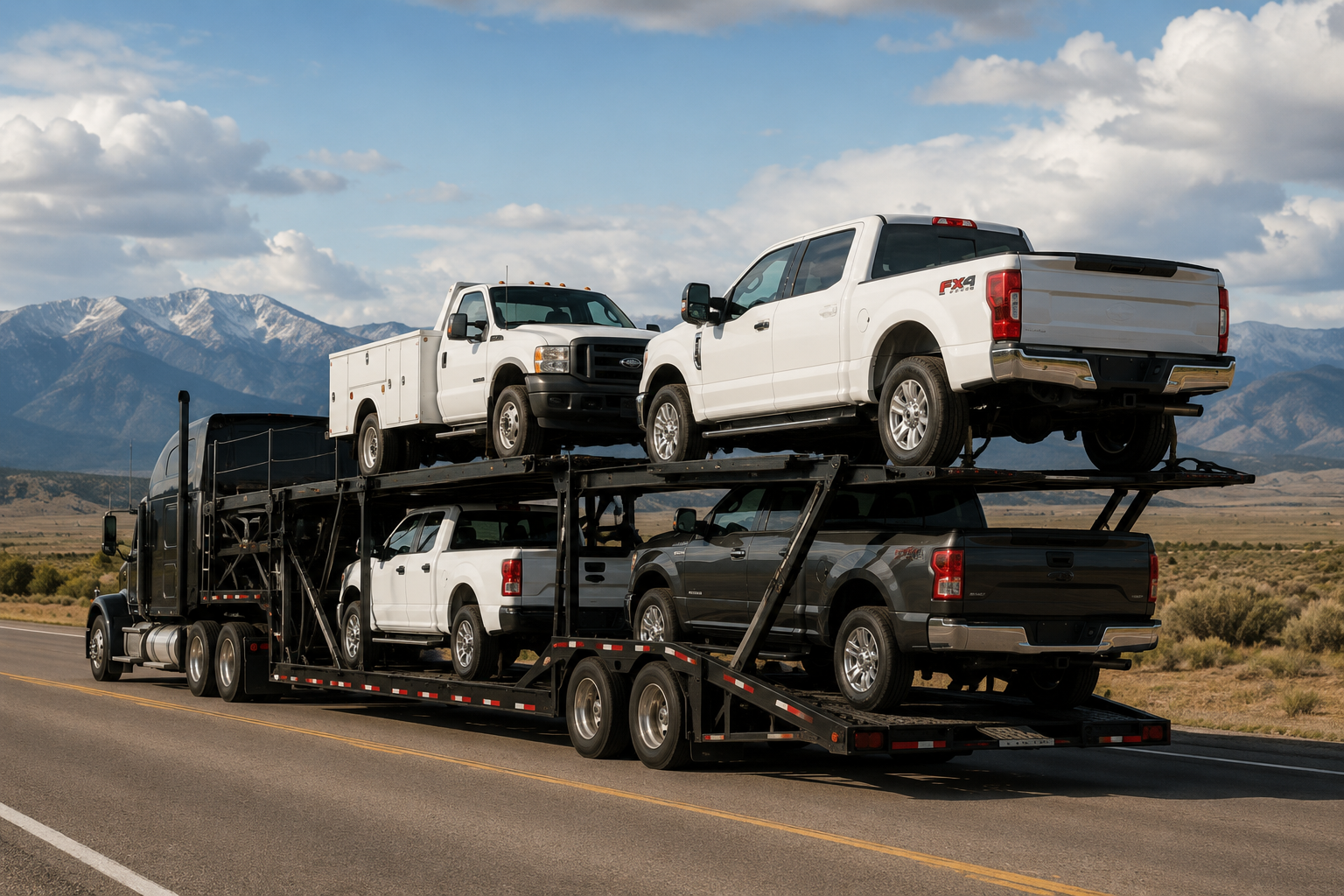
Once you’ve bought a work truck and locked in your shipping quote, the next question is almost always about timing: when is this thing actually going to show up? Unlike buying something online with a guaranteed two-day delivery window, truck shipping runs on estimates rather than fixed dates — and understanding why can save you a lot of frustration while you wait. Here’s a realistic breakdown of how nationwide truck shipping timelines actually work, from booking to delivery.
The Short Answer
Timing breaks down into two separate phases that people often lump together: the pickup window and the transit time. Car shipping typically starts a few days after you book, and most carriers provide a pickup window of three to five days from your reservation date — that’s the time it takes for a carrier to actually arrive and load your truck, which is separate from how long the drive itself takes. Once your truck is loaded, expect delivery to take anywhere from a few days to two weeks, depending on distance and route.
Put those two phases together, and cross country car shipping over 1,500 miles typically takes 7 to 14 days in transit, and once you add 1 to 3 days for booking and dispatch, most customers see door-to-door delivery in 10 to 17 days.
Why It’s an Estimate, Not a Guarantee
This trips people up more than any other part of the process. A car carrier can technically drive across the entire country in a little over four days, but that’s not how it actually works in practice — carriers have to make stops along the way to pick up and drop off other vehicles, since there can be up to 10 or 11 vehicles on a single truck, and they’re not usually all headed to the same city. Your truck is one stop on a route that’s serving several other customers at once.
Federal hours-of-service rules add another layer of predictability — and unpredictability. Federal regulations limit truck drivers to 11 consecutive hours behind the wheel per day, with mandatory rest breaks required to maintain safety standards, which means most auto transport carriers average 400-500 miles per day during cross-country hauls once you account for driver rest, fuel stops, and other pickups and deliveries along the way.
Because of all this, it’s considered a sign of bad faith if a transport company gives you a specific delivery date rather than an estimated window — legitimate carriers work in ranges, not guarantees, unless you’re paying extra for an expedited or guaranteed service.
Timelines by Distance
Transit time is driven primarily by how far the truck is traveling. Here’s roughly what to expect once your truck is actually loaded and moving:
- Under 500 miles: Open auto shipping for distances under 500 miles usually completes within 3-7 days on average.
- 500–1,000 miles: Shipments between 500-1,000 miles take a bit longer at 5-10 days to account for the additional road transit time.
- 1,000–1,500 miles: Standard open shipping deliveries for moves in the 1,000-1,500 mile range span about 7-14 days end-to-end.
- 1,500+ miles (true cross-country): For long-distance car transport routes over 1,500 miles, open shipping transit often completes in a 14-21 day range on average.
- True coast-to-coast (2,500–3,000 miles): The standard answer for coast to coast shipping time is 7-10 days of actual transit, with coast-to-coast auto transport covering approximately 2,500 to 3,000 miles total.
A simple rule of thumb some shippers use: generally, every five hundred miles adds roughly one day to the transit time, which gives you a quick way to ballpark your own route before requesting a formal quote.
What Slows Shipments Down
A handful of factors can extend your timeline beyond the baseline estimate:
- Rural pickup or delivery locations. Deliveries to rural or remote areas can take longer than major metro routes, since drivers on major interstate corridors run daily service while less-traveled areas require the carrier to go out of their way. If your final delivery point is off the beaten path, meeting the driver at the nearest major hub can shave meaningful time off the last leg of the trip.
- Enclosed transport. If you’re shipping something that requires enclosed transport rather than standard open transport, budget more time — enclosed carriers move fewer cars and are less available than open carriers, which adds time to both the pickup window and the overall delivery estimate. For most work trucks, sticking with open transport keeps things moving faster in addition to being cheaper.
- Seasonal demand. Summer months and holidays tend to have longer lead times due to high booking volume, since more people are moving and shipping vehicles at the same time, which stretches carrier availability thin.
- Weather and road conditions. Severe weather or road closures can delay shipments by a few days, and traffic congestion in major cities can add a day or two to transit time as well — most carriers build a small buffer into their estimates to account for this.
- Weekends and holidays. Most auto transport carriers don’t operate on weekends or major holidays, which can extend your total delivery time by a few days if your pickup or delivery window happens to overlap with one.
How the Process Actually Unfolds
Knowing the general sequence of events helps set realistic expectations for what “shipping” actually looks like day to day:
- Booking and matching. Once you book, the shipping company works to match your route with a carrier already running that direction. Placing your reservation about two weeks in advance gives the company plenty of time to find a carrier going your way, and can shorten your delivery window and sometimes even lower your cost.
- Pickup window. The carrier will arrive at your home or a nearby terminal on the scheduled day, and you’ll inspect the truck together and note its condition on the Bill of Lading before it’s loaded.
- Transit. While your truck is in transit, you can often track progress via GPS or carrier updates provided by the shipping company, giving you visibility into where things stand along the route.
- Delivery. Your driver will typically contact you with an estimated arrival window 24-48 hours before reaching your area, then confirm your delivery location and coordinate a convenient time for final inspection and paperwork. When it arrives, inspect the truck carefully and compare it to the Bill of Lading before signing off — if you notice anything off, document it immediately and contact the carrier.
How to Speed Things Up
If timing matters to you, a few practical levers can help:
- Book early. Two to four weeks ahead of your ideal pickup date gives the shipper the widest pool of carriers to match you with.
- Stick with open transport. It’s both faster and cheaper than enclosed transport since more trucks run open routes, and there are roughly nine open transport trucks on the road for every enclosed trailer.
- Be near a major metro area or highway corridor if possible. Vehicles near a major city typically get picked up in a day or two, while ones off the beaten path generally take a day or two longer just to get loaded.
- Ask about guaranteed or expedited pickup. If your timeline is tight, some shippers offer guaranteed pickup dates or expedited service within one to two business days, though this typically comes at a higher cost.
- Avoid peak season if your dates are flexible. Off-peak seasons, such as November through March, often bring increased carrier availability and potentially shorter transit times, since overall shipping demand is lower.
Setting Realistic Expectations
The honest takeaway here: shipping a truck coast to coast is genuinely a one-to-two-week process in most cases, not a next-day delivery. That said, it’s still almost always faster, less stressful, and easier on the vehicle than driving it yourself across the country — especially for a truck you’re about to put straight to work. Understanding the pickup window versus transit time distinction, and building in a little buffer for weather or seasonal demand, will keep the process predictable rather than frustrating.
Ready to Get Your Next Truck Moving?
At True Blue Autos, we ship work trucks nationwide — everywhere except Alaska and Hawaii — and our team will give you a clear, honest timeline before you ever commit to a purchase. No vague promises, no guessing games about when your truck will actually show up.
1661 N Michigan Ave, Greensburg, IN 47240
Call: (812) 222-8783
Contact True Blue Autos
Reach out today and let’s get your next work truck on the road — and to your door.
Frequently Asked Questions
How long does nationwide truck shipping typically take?
For cross country shipping over 1,500 miles, expect 7 to 14 days in transit, plus 1 to 3 days for booking and dispatch — most customers see door-to-door delivery in 10 to 17 days total. Shorter routes take less time, while true coast-to-coast shipments tend to land toward the higher end of that range.
What’s the difference between the pickup window and transit time?
They’re two separate phases. Most carriers provide a pickup window of three to five days from your reservation date — that’s how long it takes for a carrier to actually arrive and load your truck. Transit time is the separate clock that starts once your truck is loaded and on the road, and it’s driven mainly by distance.
Why can’t a shipping company just give me an exact delivery date?
Because your truck isn’t traveling alone. There can be up to 10 or 11 vehicles on a single carrier, and they’re not usually all headed to the same destination, so the driver makes multiple stops along the route. It’s actually considered a sign of bad faith if a company promises a specific delivery date rather than an estimated window, unless you’re paying for a guaranteed or expedited service.
How long does a short regional shipment take compared to a cross-country one?
Distance drives almost everything. Under 500 miles usually completes within 3-7 days, 500-1,000 miles takes about 5-10 days, and a true cross-country move over 1,500 miles typically runs 14-21 days for open transport. A simple rule of thumb: every five hundred miles adds roughly one day to transit time.
Does the type of transport affect how long shipping takes?
Yes. Enclosed carriers move fewer cars and are less available than open carriers, which adds time to both the pickup window and overall delivery. Since most work trucks ship via open transport anyway, this usually isn’t a concern — open transport is both faster and cheaper for the kind of pickups, flatbeds, and service trucks we sell.
What can delay my shipment?
A few common culprits: rural pickup or delivery locations that are off major routes, severe weather or road closures, high seasonal demand (especially summer months and holidays), and weekends or holidays when most carriers don’t operate. Good carriers build a small buffer into their estimates to account for these.
Can I speed up delivery if I need the truck faster?
A few things help: booking two to four weeks ahead gives the shipper more carrier options, sticking with open transport is inherently faster than enclosed, and being located near a major metro area or highway corridor typically means faster pickup. Some companies also offer guaranteed or expedited pickup for an added cost if your timeline is tight.
How will I know when my truck is actually going to arrive?
Most carriers provide tracking during transit and will contact you directly as delivery gets close — typically with an estimated arrival window 24-48 hours before reaching your area, followed by a more specific call as the driver gets closer. Make sure you or a trusted representative are available to inspect the truck and complete paperwork at delivery.
Is it faster to just drive the truck myself?
Technically, yes — a straight drive takes far less time than shipping, since a carrier realistically only covers about 400-500 miles per day due to federal hours-of-service rules and multiple stops along the route. But for longer distances, shipping saves you the time, fuel, and wear of driving it yourself, and the truck arrives ready to work instead of already racking up mileage.
Should I book shipping before or after I finalize the truck purchase?
Once your purchase is confirmed, booking shipping as early as possible works in your favor. Placing your reservation about two weeks in advance gives the shipping company time to match your route with the right carrier, which can shorten your delivery window and sometimes even improve your rate.
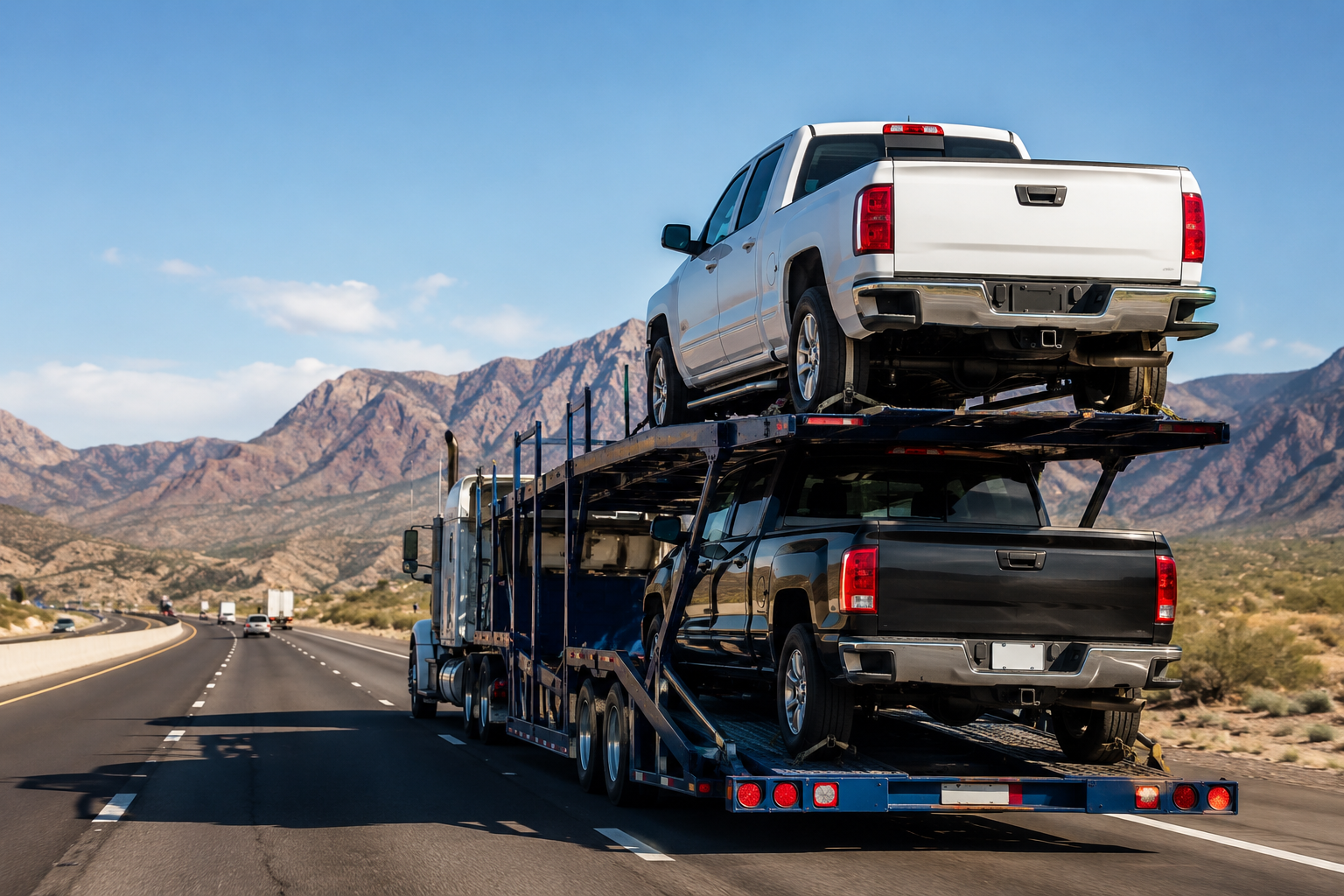
Once you’ve found the right work truck, the next question is almost always the same: what’s it actually going to cost to get it to you? Truck shipping costs aren’t a single flat number — they move based on distance, size, season, and a handful of other variables that are worth understanding before you request a quote. Here’s a realistic breakdown of what to expect when shipping a truck cross-country, and what actually moves the price up or down.
The Short Answer
For a standard truck shipment, the cost to ship a truck typically ranges from $800 to $1,700, with larger and heavier trucks running higher. Zoomed out across all vehicle types, most people shipping a vehicle cross-country pay somewhere between $1,200 and $1,800 for open transport, and coast-to-coast routes exceeding 2,500 miles can reach $1,200 to $1,500 or more depending on the route, timing, and carrier availability. Trucks specifically tend to sit at the upper end of these ranges — pickup trucks cost roughly 38% more to ship than standard cars simply because of the extra size and weight they add to the trailer.
Why the Cost-Per-Mile Actually Drops on Longer Trips
This surprises a lot of first-time shippers: a cross-country move usually costs less per mile than a short one. A 300-mile haul might run $1.40 to $2.20 per mile, while a 2,000-mile cross-country move can drop to $0.40 to $0.70 per mile. The reason comes down to fixed costs — a carrier’s fuel, time, and insurance expenses get spread across far more miles on a long haul, which lowers the effective rate even though the total invoice is higher.
That means a truck traveling from Indiana to California, while a bigger total number, may actually be a more efficient shipment on a per-mile basis than moving that same truck two states over.
What Actually Drives the Price
- Size and weight. This is the single biggest factor specific to trucks. Larger vehicles weigh more and take up more space on a transport trailer, and because carriers work within strict weight limits, a heavy-duty truck takes up room that could otherwise carry another vehicle — which is reflected directly in the price. As a rule of thumb, full-size trucks can run roughly 35-40% more than a standard car to ship.
- Distance and route popularity. Beyond the basic mileage, the specific route matters. Carriers running high-traffic interstate corridors typically offer the most competitive rates because trailer space fills quickly along established routes, while less common state-to-state routes or shipments involving rural pickup or delivery locations can add $100 to $300 to the total cost.
- Open vs. enclosed transport. Since most work trucks ship via open carrier, this is usually the affordable path already — but it’s worth knowing that enclosed transport typically costs 30% to 60% more than open shipping, so sticking with open transport (the standard choice for a working truck) keeps costs down without giving up meaningful protection.
- Operability. A truck that runs, steers, and brakes normally is far cheaper to ship than one that doesn’t. Inoperable vehicles require specialized equipment, such as a winch, to load them onto the truck, and that extra time and equipment typically adds $150 to $300 to the total cost.
- Season. Timing your shipment can meaningfully change the price. Prices are usually highest in spring and summer and lowest in late fall and winter, so a shipment scheduled outside the busy relocation season can come in noticeably cheaper.
- Pickup and delivery flexibility. Being flexible with your dates by even a few days can meaningfully lower your quote, since carriers prefer to fill their trucks efficiently before departing — a rigid, exact-day pickup window generally costs more than a 2-3 day window that gives the carrier room to plan.
A Rough Cost Snapshot by Distance
Based on typical 2026 market pricing for standard open transport:
- Under 500 miles: roughly $495–$650, though short routes often carry a higher per-mile rate
- 500–1,500 miles: roughly $850–$1,200, depending on route demand and vehicle size
- 1,500–2,500+ miles (true cross-country): roughly $1,200–$1,800 for open transport
Remember these are baseline ranges for a standard vehicle — a heavy-duty pickup, flatbed, or service truck will typically land above these figures given its extra size and weight.
Is Shipping Actually Worth It Compared to Driving?
For longer distances, the math tends to favor shipping once you account for everything else involved. For cross-country moves or long distances, shipping can actually save money once you factor in gas, hotels, meals, and time off work, and it’s also easier on the vehicle itself — a truck that’s shipped avoids the extra mileage and wear a multi-day drive would put on it before it’s even gone to work. For shorter, regional moves, driving may still make more sense, but once you’re talking 500 miles or more, shipping is often the smarter and less stressful option.
How to Keep Your Shipping Cost Down
A few practical levers that actually move the price:
- Book early and stay flexible. A wider pickup window gives carriers more scheduling options and can meaningfully lower your rate.
- Stick with open transport unless the truck genuinely needs extra protection — it remains the standard, cost-effective choice for work trucks.
- Avoid peak season if you can. Shipping in late fall or winter, rather than the busy spring-to-summer relocation window, tends to come in cheaper.
- Confirm the truck is operable before shipping, since a running, driving condition avoids the extra cost of specialized loading equipment.
- Compare a few quotes. Get quotes from multiple companies to ensure you’re getting the best deal, since pricing can vary meaningfully between brokers and carriers even for the same route.
What to Watch Out For
Not every quote you get will be trustworthy. Reputable carriers don’t demand full payment upfront — look for transparent deposits and clear cancellation policies instead. It’s also worth checking that any carrier is properly licensed: verify a company’s USDOT number and Motor Carrier (MC) number through the FMCSA database before booking, since legitimate operators will have both.
Get a Real Number for Your Next Work Truck
Every route is different, and the only way to know exactly what your truck will cost to ship is to get real numbers based on your specific pickup point, destination, and vehicle. At True Blue Autos, we ship work trucks nationwide — everywhere except Alaska and Hawaii — and our team will walk you through a clear, no-surprises quote before you commit to anything.
1661 N Michigan Ave, Greensburg, IN 47240
Call: (812) 222-8783
Contact True Blue Autos
Reach out today and let’s get your next work truck priced and on its way.
Frequently Asked Questions
How much does it typically cost to ship a truck across the country?
The cost to ship a truck typically ranges from $800 to $1,700, with larger and heavier trucks running toward the higher end. For a true cross-country move of 1,500 to 2,500+ miles, most people pay somewhere between $1,200 and $1,800 for standard open transport.
Why does shipping cost less per mile on longer trips?
It comes down to fixed costs. A carrier’s fuel, time, and insurance expenses get spread across more miles on a long haul, which lowers the effective rate — a 300-mile haul might run $1.40 to $2.20 per mile, while a 2,000-mile cross-country move can drop to $0.40 to $0.70 per mile. The total invoice is higher on a longer trip, but the per-mile rate is actually lower.
Why do trucks cost more to ship than regular cars?
Size and weight are the biggest factors. Pickup trucks cost roughly 38% more to ship than standard cars, since they’re heavier and take up more space on the trailer — and because carriers work within strict weight limits, a heavy truck can mean fewer total vehicles fit on that load, which affects pricing.
Does the specific route matter, or just the distance?
Both. Carriers running high-traffic interstate corridors typically offer more competitive rates because trailer space fills quickly along established routes, while less common routes or rural pickup and delivery locations can add $100 to $300 to the total cost.
Should I choose open or enclosed transport for a work truck?
Open transport is almost always the right call for a work truck. Enclosed transport typically costs 30% to 60% more than open shipping, and that extra protection isn’t necessary for a truck headed straight into daily job-site use rather than a garage or car show.
Does it matter if the truck is running or not?
Yes, significantly. A truck that runs, steers, and brakes normally is far cheaper to ship than one that doesn’t — inoperable vehicles require specialized equipment, such as a winch, to load them onto the trailer, which typically adds $150 to $300 to the total cost.
Is there a cheaper time of year to ship a truck?
Yes. Prices are usually highest in spring and summer and lowest in late fall and winter, so scheduling your shipment outside the busy relocation season can meaningfully reduce the cost.
Can I lower the cost by being flexible with pickup dates?
Definitely. Being flexible with your dates by even a few days can meaningfully lower your quote, since carriers prefer to fill their trucks efficiently before departing rather than working around one rigid pickup day.
Is it cheaper to just drive the truck myself instead of shipping it?
For shorter distances, maybe — but for longer moves, shipping can actually save money once you factor in gas, hotels, meals, and time off work, and it spares the truck the extra mileage and wear of a multi-day drive before it’s even gone to work. Past roughly 500 miles, shipping is often the more practical option.
How do I know a shipping company or quote is legitimate?
Check their credentials before booking. Verify a company’s USDOT number and Motor Carrier (MC) number through the FMCSA database, and be cautious of any carrier that demands full payment upfront — reputable companies use transparent deposits and clear cancellation policies instead.
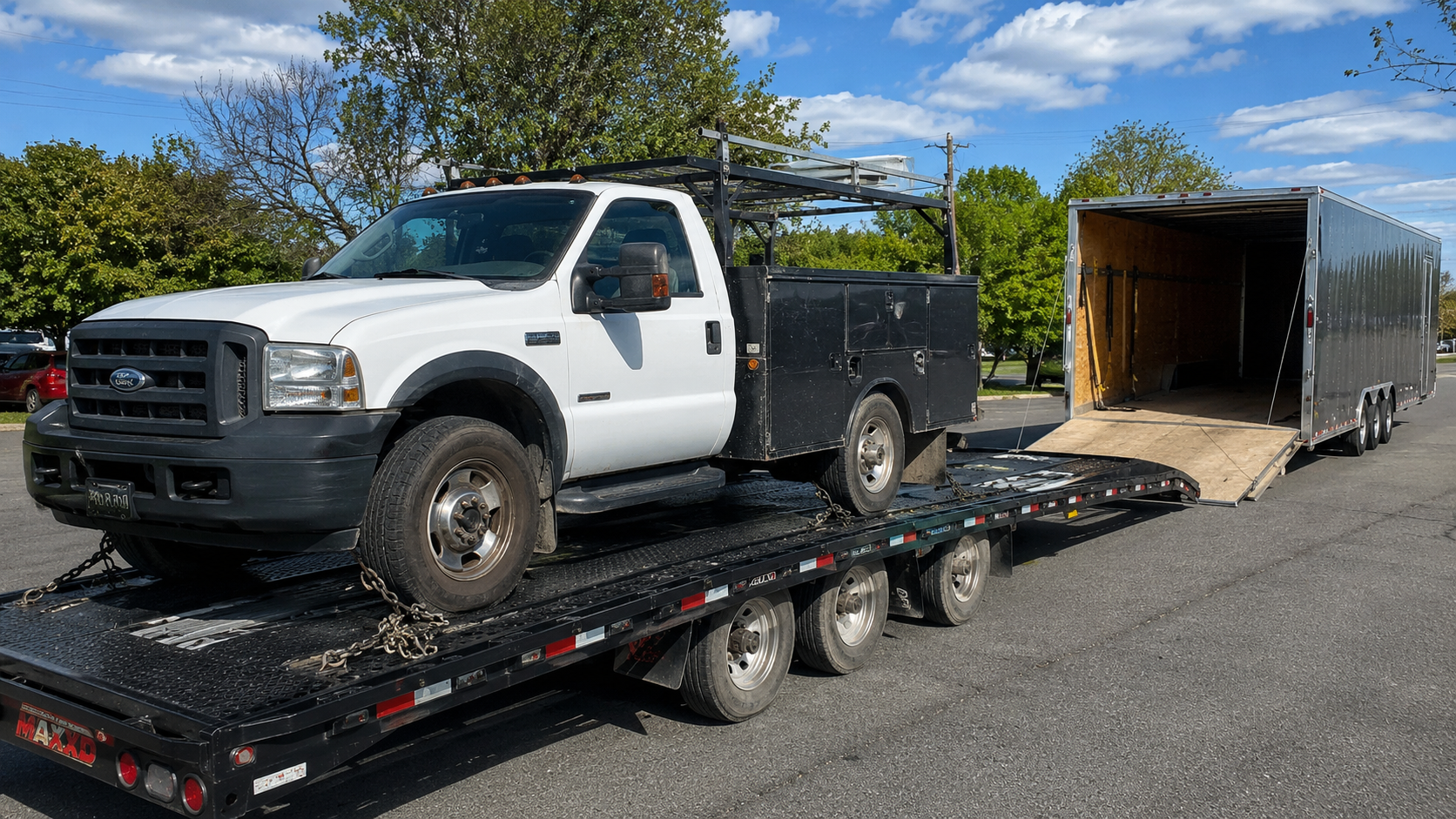
If you’re having a work truck shipped instead of driving it home yourself, one of the first questions you’ll run into is which type of trailer it rides on. There are two main options — open transport and enclosed transport — and the right choice depends less on personal preference and more on what kind of truck you’re shipping and what you’re using it for. Here’s how each method actually works, what it costs, and which one makes sense for a heavy-duty pickup, flatbed, or service truck headed to a job site rather than a showroom.
What Open Transport Actually Is
Open transport is the standard and most common way to move vehicles in the U.S., and it’s not close — nearly 90% of all auto transport shipments use open carriers. These are the double-decker trailers you see hauling rows of vehicles down the interstate every day. They’re typically two-tiered and capable of hauling between 7 to 10 vehicles at a time, which is exactly what keeps the price down: because multiple vehicles share the trailer, the cost per vehicle drops since it’s spread across everyone riding along.
The tradeoff is exposure. Vehicles on an open trailer are subject to weather, road dust, and debris the entire trip, since the trailer has no walls or roof. In practice, though, this is a manageable risk rather than a common problem — most vehicles shipped on open carriers arrive without incident, which is exactly why it’s the default choice for dealerships moving inventory and rental fleets relocating vehicles between locations.
What Enclosed Transport Actually Is
Enclosed transport moves your vehicle inside a fully covered trailer — walls, roof, the works — protecting it from weather, debris, and road elements for the entire trip. Because the trailer is covered, it can’t carry nearly as many vehicles at once: these trailers typically carry two to six vehicles at once, which means more attentive handling but a meaningfully higher cost per vehicle.
Enclosed carriers also tend to come with equipment built for vehicles that need gentler handling — hydraulic lift gates for low-clearance vehicles and soft-strap tie-downs that avoid contact with the vehicle’s body or undercarriage are both common. That’s part of why enclosed is the go-to choice for classic cars, exotics, and other vehicles where the goal is zero exposure, not just safe delivery.
The Cost Difference
This is usually the deciding factor, and it’s a big one. Enclosed transport typically runs 30 to 60 percent more than open shipping for the same route, and other estimates land in a similar range — enclosed transport can be 30–60% more expensive than open shipping in exchange for reduced risk of damage. Put in dollar terms, one industry analysis found enclosed shipping averaged around $1,500, roughly 40% more than the equivalent open transport quote.
For a work truck, that price gap matters more than it would for a weekend car. Spending several hundred extra dollars to protect a vehicle that’s about to spend its life hauling materials, parking at job sites, and picking up its fair share of dust and scratches on the job is a hard case to make.
Why Open Transport Is the Right Call for Most Work Trucks
A few things point clearly toward open transport when you’re shipping a heavy-duty pickup, flatbed, or service truck rather than a specialty vehicle:
- It’s built for everyday, working vehicles. Open transport tends to make sense when the vehicle is simply transportation — not a collector piece, not a restoration project, not something with rare trim or irreplaceable parts — and most everyday sedans, SUVs, and pickup trucks fall into exactly that category.
- It’s faster to book and schedule. Because there are far more open carriers on the road than enclosed ones, open shipping is more widely available and easier to schedule, with more flexible timing and often quicker turnaround than waiting for a specialized enclosed trailer.
- The exposure risk doesn’t line up with how the truck will be used. A truck headed straight into daily commercial use is going to face dirt, weather, and wear on the job site almost immediately. Minor exposure during a multi-day transport trip is a non-issue for a vehicle whose next chapter involves hauling equipment and working outdoors.
- Width can actually be a limiting factor. It’s worth noting that enclosed trailers are slightly narrower than open ones, so wider vehicles like trucks or large SUVs may not even qualify for enclosed shipping in the first place — another practical reason most work trucks end up on open carriers by default.
When Enclosed Transport Might Still Make Sense
There are a few edge cases worth knowing about, even if they’re the exception rather than the rule for work trucks:
- A heavily customized or highly specialized build. If the truck has custom bodywork, low ground clearance, or expensive aftermarket equipment that would be costly to repair, the added protection may be worth it.
- Extreme weather routes. Shipping routes longer than 1,000 miles, through winter weather, or through coastal salt exposure are situations where enclosed transport is worth considering regardless of vehicle type.
- High-value trucks. A brand-new, fully loaded Super Duty or specialty service truck with a high price tag might justify the extra cost the same way a luxury vehicle would.
For the vast majority of used work trucks, though, none of these apply — which is exactly why open transport remains the standard choice.
What to Check Before You Book Either Option
Regardless of which method you choose, a few things are worth confirming with your shipper before the truck ever gets loaded:
- Insurance coverage. Both open and enclosed carriers are required to carry cargo insurance, but coverage limits and claim processes can vary — ask for proof of insurance and coverage limits before booking, and don’t assume more expensive automatically means more coverage.
- A condition report at pickup and delivery. This documents any pre-existing damage before the truck loads and confirms its condition again at delivery — reviewing it carefully at both points is the only way to document a damage claim if something goes wrong in transit.
- Never sign off before inspecting the truck. Don’t sign delivery paperwork saying the vehicle was “received in good condition” if you notice any damage, since signing without notes can make a legitimate claim much harder to pursue later.
Bottom Line
For nearly every heavy-duty pickup, flatbed, or service truck, open transport is the practical, cost-effective choice — it’s faster to schedule, widely available, and perfectly suited to a vehicle that’s about to go straight to work. Enclosed transport earns its premium for classic, exotic, or highly specialized vehicles where absolute protection matters more than cost, which describes very few work trucks.
Get Your Work Truck Shipped the Right Way
At True Blue Autos, every work truck we ship nationwide goes out on a trusted, insured carrier — and our team will walk you through exactly what to expect from pickup to delivery. Whether you’re eyeing a flatbed, a Super Duty pickup, or a service truck, we’ll help you get it home without the guesswork.
1661 N Michigan Ave, Greensburg, IN 47240
Call: (812) 222-8783
Contact True Blue Autos
Reach out today and let’s get your next work truck on the road.
Frequently Asked Questions
What’s the main difference between open and enclosed transport?
The core difference is exposure. Open transport secures vehicles safely but leaves them exposed to environmental factors like weather and road debris, while enclosed transport minimizes these factors almost entirely by placing the vehicle inside a fully covered trailer. Both methods get your truck from point A to point B safely — they just differ in how much protection surrounds it along the way.
Which method is more common?
Open transport, by a wide margin. Nearly 90% of all auto transport shipments use open carriers, making it the standard choice for dealerships, rental fleets, and everyday buyers alike. Enclosed transport is the exception, generally reserved for vehicles that need extra protection.
How much more does enclosed transport cost?
Expect to pay significantly more. Enclosed transport typically runs 30 to 60 percent more than open shipping for the same route, and in dollar terms, industry data has put average enclosed shipping costs around $1,500, roughly 40% higher than the equivalent open transport quote.
Why is enclosed transport so much more expensive?
It comes down to capacity and equipment. Enclosed trailers typically carry only two to six vehicles at once, compared to seven to ten on an open trailer, so the cost of the trip gets spread across far fewer customers. Enclosed carriers also tend to include specialized equipment like hydraulic lift gates and soft-strap tie-downs, which adds to the cost of the service.
Is open transport safe for a work truck?
Yes. Most vehicles shipped on open carriers arrive without incident, and open transport is exactly what dealerships use to move their own inventory and what rental fleets use to relocate vehicles. For a truck that’s about to spend its life on job sites anyway, the minor weather and road-dust exposure during a multi-day transport trip is a non-issue.
When should I consider enclosed transport for a truck?
A few situations where it’s worth the extra cost: the truck has custom bodywork or expensive aftermarket equipment that would be costly to repair, the shipping route is long-distance through winter weather or coastal salt exposure, or the truck itself carries a high enough value that the added protection makes financial sense. For most used work trucks, none of these apply.
Can every truck even be shipped enclosed?
Not necessarily. Enclosed trailers are slightly narrower than open ones, so wider vehicles like trucks or large SUVs may not qualify for enclosed shipping at all. This is one more reason most work trucks end up on open carriers, regardless of preference.
Does my truck need extra insurance during transit either way?
Both open and enclosed carriers are required to carry cargo insurance, but coverage limits and claim processes can vary between carriers. It’s worth asking for proof of insurance and specific coverage limits before you book, rather than assuming a higher price automatically means more coverage.
What should I do when the truck is picked up and delivered?
Review the condition report carefully both times. A condition report documents any pre-existing damage before the truck is loaded and is checked again at delivery — it’s the only real way to document a damage claim if something goes wrong in transit. Never sign delivery paperwork confirming the truck was received in good condition if you actually notice damage, since signing without notes can make a legitimate claim much harder to pursue.
So which one should I choose for a work truck?
For nearly every heavy-duty pickup, flatbed, or service truck, open transport is the practical choice — it’s faster to schedule, more widely available, and well-suited to a vehicle headed straight into daily job-site use. Enclosed transport is worth the premium mainly for classic, exotic, or heavily customized vehicles where absolute protection matters more than cost.
If the right work truck isn’t sitting on a lot near you, that shouldn’t stop you from buying it. More and more buyers — contractors, landscapers, small fleet owners, tradespeople — are shopping nationally instead of settling for whatever heavy-duty pickup or flatbed happens to be within driving distance. Buying used has changed too: shopping for a car has changed dramatically in recent years, and long gone are the days of spending your entire weekend going from one car lot to another, since with thousands of vehicles available all across the country, you can search for the exact truck you want from your couch. Here’s exactly how to buy a commercial work truck out of state, handle the paperwork, and get it shipped straight to your door.
Step 1: Know Why Shopping Out of State Makes Sense
There are a few real reasons buyers look beyond their home state for a work truck. Sometimes it’s simple economics — sometimes buying a car from a different state can be cheaper than the ones in your home state, though this isn’t guaranteed and depends heavily on local pricing in both markets. Other times it’s about spec: reasons for shopping out-of-state include looking for vehicles with specific features or equipment you want but that may not be available in your area — a flatbed with the exact bed length you need, or a service truck with the utility body configuration your crew actually uses, might only be sitting on a lot three states away.
Whatever the reason, the calculation is the same: weigh the savings or spec advantage against the extra cost of getting the truck home, and decide if it still comes out ahead of buying local.
Step 2: Verify the Truck Before You Commit
Buying a truck you can’t walk around in person means your due diligence has to work harder. A few non-negotiables:
- Pull a vehicle history report. If you’re buying a truck you haven’t seen, the first step should be ordering a vehicle history report — it’ll tell you when and where the truck was purchased and whether it’s ever been in an accident, along with any cosmetic or mechanical damage on record.
- Get real photos and, if possible, a mobile inspection. Ask for photos of the areas most likely to be worn — bed liners, hitch points, tires, undercarriage — and make sure the photos are recent so they reflect the truck’s current condition rather than how it looked when it was first listed.
- Lean on a dealer’s inspection process. Buying from an established dealership rather than a private seller typically means you get more help completing paperwork and some form of guarantee that the truck has already been inspected and is in good working order — which is exactly the kind of process a dealership tied to an auto body shop, doing its own inspections and detailing in-house, can offer.
- Confirm the title is clean. Make sure there are no outstanding liens before any money changes hands.
Step 3: Negotiate and Lock In the Deal
Once you’ve found the right truck, treat the negotiation the way you would any purchase where you can’t be there in person. The general process is to negotiate the out-the-door price by phone or email, and after you’ve reviewed an inspection report and agreed on a price, place a deposit and request a signed buyer’s order — that protects you from a last-minute price change once you’ve already committed to shipping.
A few things worth sorting out at this stage:
- Financing. If you’re not paying cash, get pre-approved before you finalize the deal so you know your real budget, including the extra costs like registration, shipping, and insurance that come on top of the purchase price.
- Trade-ins. If you’re trading in a vehicle, treat it as a separate transaction from the purchase — negotiating your trade-in value separately from the new purchase price generally gets you a fairer number than letting a dealer bundle the two together.
- Ask what the dealer handles. A dealership experienced in shipping vehicles nationwide should be able to tell you upfront whether they handle sales tax collection, registration paperwork, and shipping coordination — or which of those fall to you.
Step 4: Sort Out Sales Tax
This trips up a lot of first-time out-of-state buyers. Even if you’re buying from a state with no sales tax, you’re still required to pay tax in the state where you’ll register and drive the truck. If you’re buying from a dealer, this part is usually simple — the dealership should be able to collect the necessary taxes on your behalf for the state where you live and provide documentation showing it was paid.
It’s still worth double-checking the amount against your home state’s rate. If the wrong amount was collected, you’ll find out when you register the truck locally — you’ll either receive a credit or owe the difference at that point.
Step 5: Get Insurance Before the Truck Moves
Don’t wait until the truck is in your driveway to think about coverage. Every car needs valid proof of insurance to be operated on a public road, so make sure the truck is added to your policy before you finalize the purchase — most insurers will issue a temporary card right away, with the official one following by mail. Even if the truck is being shipped rather than driven, it’s worth protecting it in transit: consider comprehensive and collision coverage in case the truck is damaged, stolen, or vandalized while in transit, and know that liability coverage is typically required of any auto transport company hauling your vehicle to cover potential damage during the move.
Step 6: Choose How the Truck Gets to You
For work trucks in the pickup, flatbed, and service-truck range — as opposed to full Class 8 semis — you generally have two realistic options.
- Drive it home yourself. In most states, temporary plates are issued to allow a newly purchased vehicle to be driven home, so long as you have insurance in place first. This can work if the truck is a reasonable distance away and you don’t mind the road trip, but factor in fuel, lodging, and the extra mileage that goes straight onto a truck you just bought.
- Have it shipped. For most buyers, especially those getting a heavy-duty pickup or flatbed from several states away, shipping is simpler and puts less wear on the truck. Since your vehicle is located out of state, it can be convenient to have it shipped directly to you rather than scheduling a road trip, and many dealerships now offer this as a built-in service rather than leaving you to find a carrier on your own.
What shipping actually looks like. Work trucks in this weight class typically ship the same way passenger vehicles do — via open transport on a multi-car carrier — which keeps costs reasonable compared to specialized heavy-haul equipment needed for larger commercial rigs. Costs vary by distance and season, with rates generally running lower per mile the farther the truck travels, since fixed costs get spread over a longer haul.
What to have ready. Before a carrier can schedule pickup, they’ll need the truck’s year, make, and model, plus the exact pickup and delivery locations, since basic vehicle information is vital for planning the truck’s placement on the carrier.
Vetting the shipper. If your dealer doesn’t handle shipping directly, do some basic vetting on whoever does. A clean, itemized quote with a real delivery window is a good sign, while red flags include no clear delivery window, no proof of insurance or carrier credentials, no written confirmation of the rate, and requests for full payment upfront rather than a standard deposit-and-delivery arrangement.
Step 7: Register the Truck at Home
Once the truck arrives, you’ll need a small stack of paperwork to complete registration — generally a bill of sale, a properly signed and dated title, and any lender paperwork if the truck was financed. Getting your title and registration in order is usually straightforward when buying from an out-of-state dealer, since they typically handle the necessary paperwork for you rather than leaving you to track it all down yourself, the way you would with a private-party purchase.
If your title doesn’t show up right away — especially on a financed truck — be patient. If it’s coming from a bank, it can take several weeks, and your lienholder will be tracking it in the meantime.
Common Pitfalls to Avoid
- Skipping the inspection because the truck is far away and inconvenient to see in person.
- Assuming sales tax is handled without asking for documentation of what was actually collected.
- Letting a private seller arrange shipping — a dealer coordinating trusted, insured carriers is a safer bet than an individual seller handling logistics themselves.
- Wiring money before the title is confirmed clean.
- Not asking about extended coverage on a used work truck that’s about to go straight into daily commercial use.
Ready to Find Your Next Work Truck?
Shopping out of state opens up a much wider selection of heavy-duty pickups, flatbeds, and service trucks than sticking to what’s parked nearby — and True Blue Autos in Greensburg, Indiana makes it easy to get one delivered. They ship nationwide (everywhere except Alaska and Hawaii), offer financing and trade-in options, and every vehicle is inspected and detailed by their sister company, Enneking Auto Body, before it ever reaches you.
1661 N Michigan Ave, Greensburg, IN 47240
Call: (812) 222-8783
Contact True Blue Autos
Reach out today and let’s find the right work truck for your business.
Frequently Asked Questions
Can I really buy a commercial truck from another state and have it shipped to my door?
Yes. This is a common and straightforward process, especially when working with a dealership that already offers nationwide vehicle delivery. Since your vehicle is located out of state, it can be convenient to have it shipped directly to you rather than scheduling a road trip, and many dealerships build this into the buying process rather than leaving you to arrange it yourself.
Do I have to pay sales tax in the state where I buy the truck, or in my home state?
You pay sales tax in the state where you’ll register and drive the truck — not necessarily where you bought it. Even if you’re purchasing from a state with no sales tax, you’re still required to pay tax in the jurisdiction where you will be driving the truck. If you’re buying from a dealer, they can typically collect that tax on your behalf and provide documentation showing it was paid.
What if the dealer collects the wrong amount of sales tax?
It gets reconciled when you register the truck locally — you’ll either receive a credit or owe the difference at that point. It’s worth double-checking the collected amount against your home state’s rate before you finalize the purchase, just so there are no surprises at registration.
Can I drive the truck home myself instead of shipping it?
In most cases, yes, provided you get temporary tags. In most states, temporary plates are issued to allow a newly purchased vehicle to be driven home, but you’ll need active insurance coverage in place before taking it on the road. Whether driving makes sense comes down to distance — a short trip might be worth it, while a longer one usually favors shipping, both for cost and to avoid putting extra miles on a truck you just bought.
How is a work truck shipped, and how long does it take?
Heavy-duty pickups, flatbeds, and service trucks typically ship the same way passenger vehicles do — via open transport on a multi-car carrier — rather than requiring the specialized heavy-haul equipment larger commercial rigs need. Transit time and pricing depend mainly on distance and season, with cost per mile generally dropping the farther the truck travels since fixed costs spread across a longer haul.
Do I need insurance before the truck ships, even if I’m not driving it?
It’s strongly recommended. Every truck needs valid proof of insurance to be operated on a public road once it arrives, so it makes sense to have coverage in place before the purchase is finalized. It’s also worth carrying comprehensive and collision coverage during transit in case the truck is damaged, stolen, or vandalized on the way to you, since carriers typically only provide liability coverage for damage they cause.
Will I have to handle the title and registration paperwork myself?
Usually not, if you’re buying from a dealership. Getting your title and registration in order is generally straightforward when buying from an out-of-state dealer, since they typically handle the necessary paperwork for you. Private-party purchases put more of that burden on the buyer.
What if my truck was financed — how long until I get the title?
Be patient, especially if a lender is involved. If the title is coming from a bank, it can take several weeks to arrive, and your lienholder will keep track of its status in the meantime.
Can I trade in my current vehicle as part of an out-of-state purchase?
Yes, and most dealerships that ship nationwide will accept trade-ins as part of the deal. It’s best to treat the trade-in as its own transaction rather than letting the dealer bundle it into your new purchase price — negotiating the two separately generally gets you a fairer number on both ends.
How do I know the shipping company is legitimate?
Look for clear signs of professionalism before you commit: a specific delivery window, proof of insurance and carrier credentials, a written rate confirmation, and a real point of contact. Any shipper asking for full payment upfront, rather than a standard deposit-and-delivery arrangement, is worth a second look.